
Wedding sessions · Italy
Wedding photo sessions in Italy
The most beautiful places for a wedding photo session in Italy – our guide
Italy has long been one of our favourite destinations for wedding sessions. We have photographed here many times, visiting both popular places and less obvious ones. From the monumental peaks of the Dolomites, through elegant villas on Lake Como, to the colourful streets of Positano and the rolling hills of Tuscany.
Each of these regions offers completely different photographic possibilities. Some captivate with their landscape, others with architecture, light or atmosphere. Not every beautiful place, however, is an equally good choice for a wedding session.
On our travels we have learned that sometimes the biggest challenge is not the photography itself, but getting there, finding the right light or obtaining permission to take photographs.
That is why we have put together a guide based on our own experience. We talk about places we love returning to, share practical tips and also mention mistakes we would no longer make today.
If you are planning a wedding session in Italy, we hope our experience helps you choose the location and plan the whole day well.
01 · Dolomites
The Dolomites – Lago di Braies and Tre Cime di Lavaredo
The Dolomites are one of the most spectacular landscapes we have ever photographed. Monumental rock walls, turquoise lakes, wide valleys and small mountain meadows create a setting that works beautifully both for romantic portraits and for wide frames in which the couple becomes a small part of a vast space.
Keep in mind, though, that a wedding session in the Dolomites requires good organisation. Mountain roads, long distances between locations and walks on foot mean that time passes much faster here than you might expect.
During our session on 22 October 2022 we managed to visit two places: Lago di Braies in the morning and Tre Cime di Lavaredo at sunset. Although it was only two locations, they filled practically the whole day. We spent the rest of the time mostly on the road.
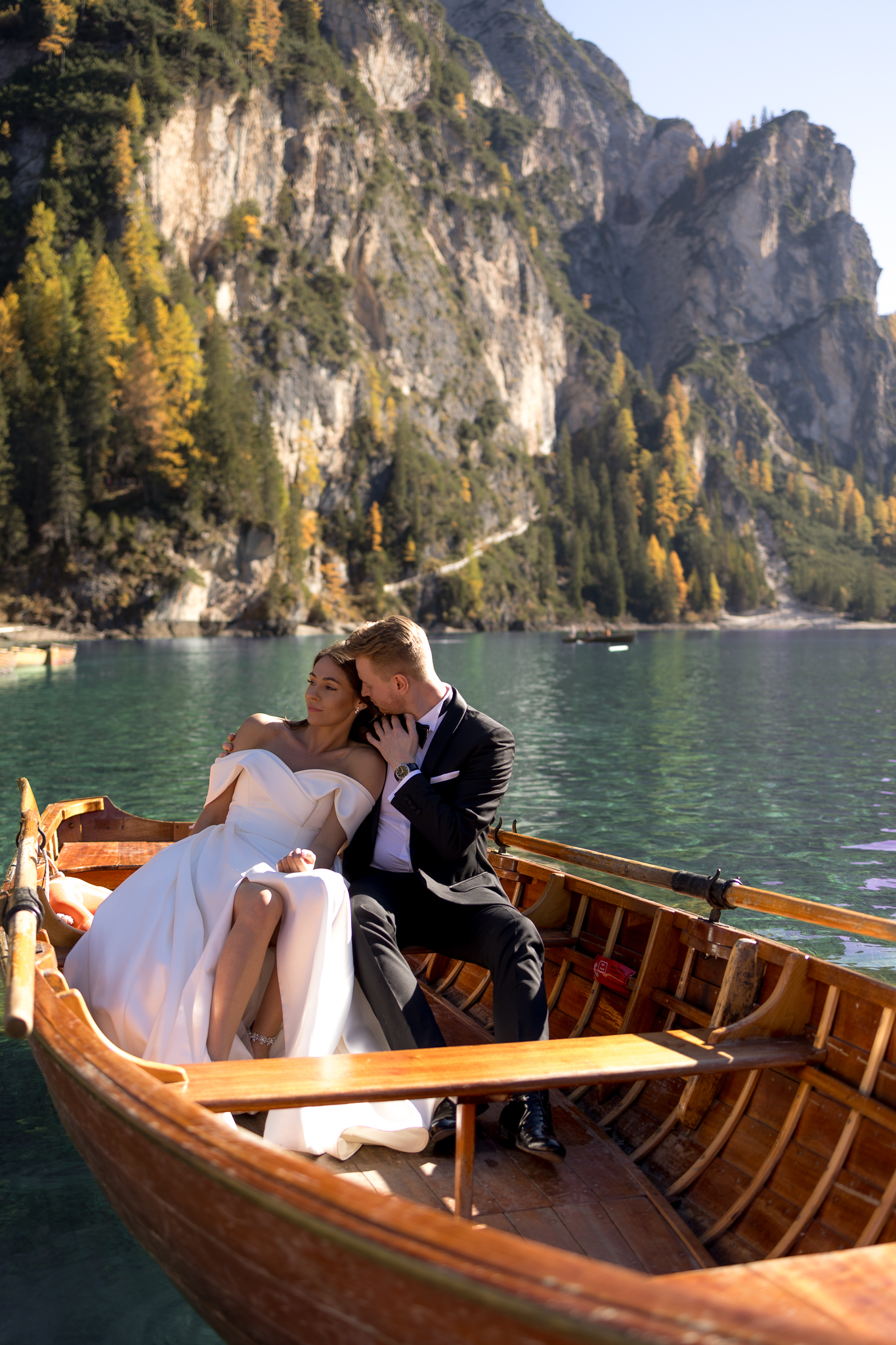
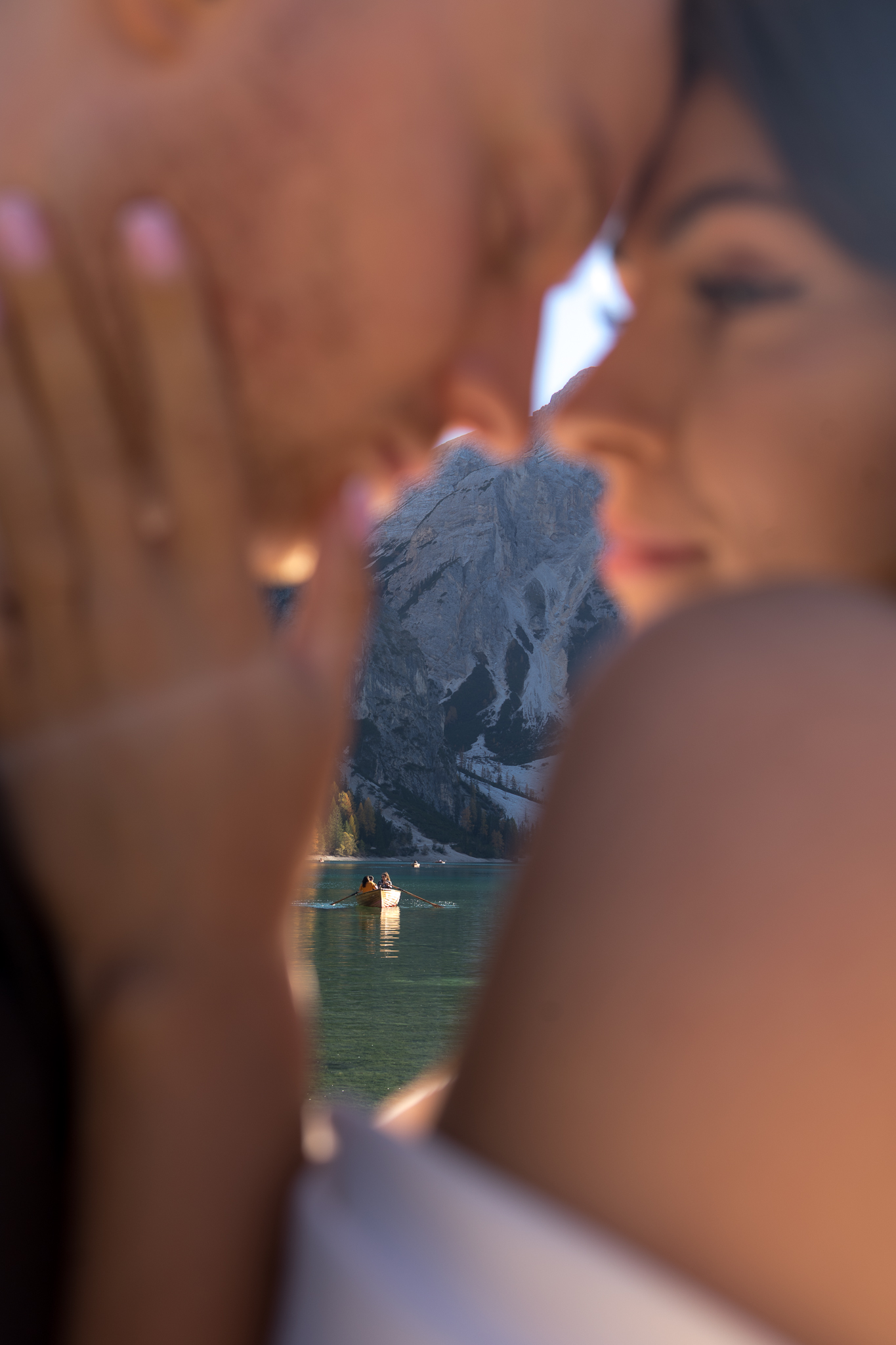
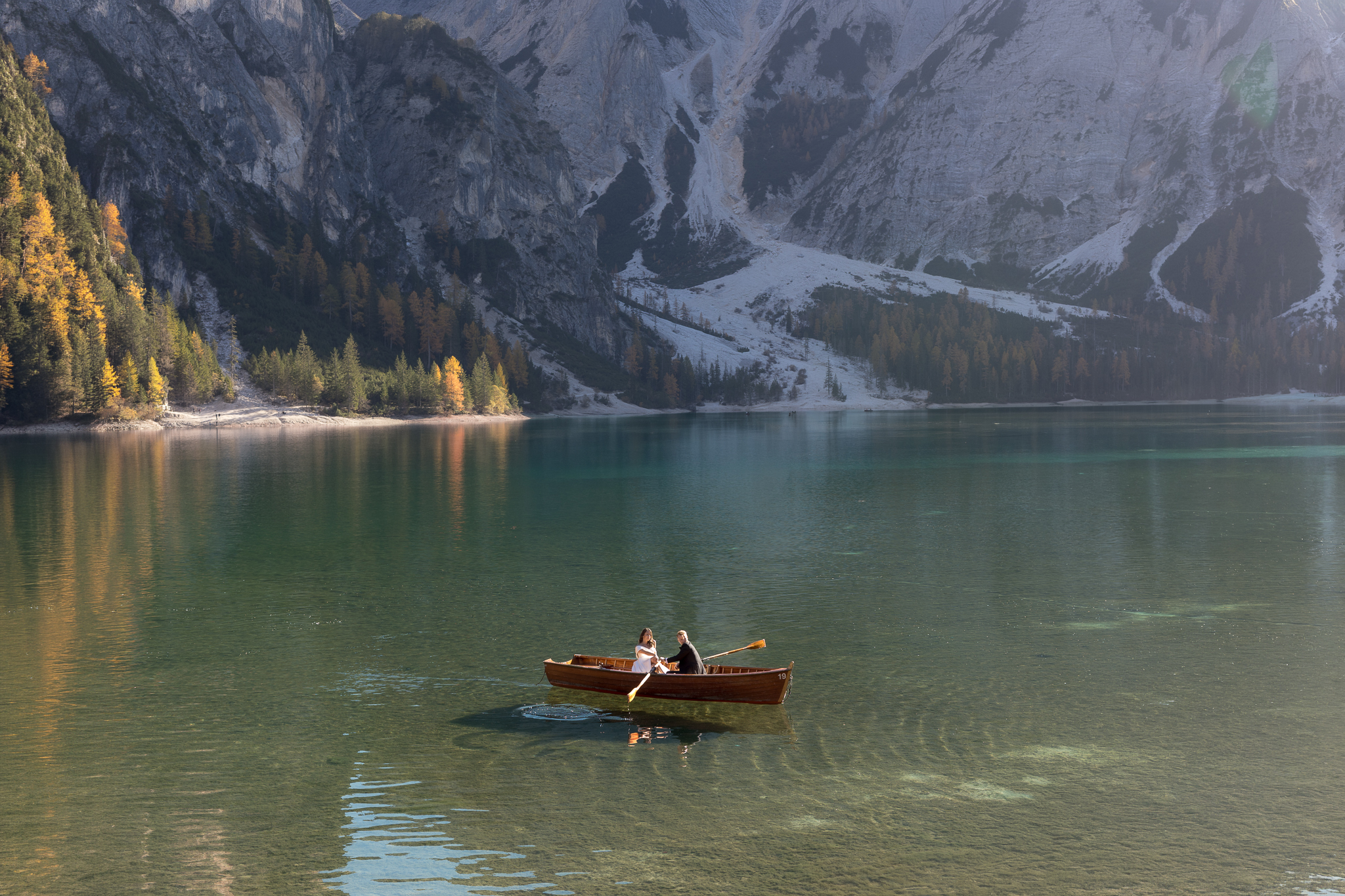
Lago di Braies – wooden boats and turquoise water
Lago di Braies is one of the most recognisable lakes in the Dolomites. Surrounded by high mountains, with its distinctive wooden boathouse and boats, it offers truly exceptional photographic possibilities.
During our session we reached the lake at around 10 am. And although we created beautiful photographs there, today we would definitely plan to arrive earlier.
By then, some of the mountains around the lake were already in shadow. The water and the boats still looked beautiful, but the rock walls in the background lacked the depth we had hoped for. The light was much less interesting than what you can get in the earlier hours.
So if we were to photograph at Lago di Braies again, we would aim for around sunrise, checking the direction of the light for the specific date beforehand.
Early morning has another advantage: it helps you avoid some of the tourists. The lake is extremely popular, and during the day it gets crowded around the boathouse.
Bear in mind, though, that arriving at dawn doesn’t mean you can rent a boat straight away. The boathouse opening hours are seasonal, and it is worth checking them before planning the session.
Photographing from two boats
One of the most interesting experiences of our session was photographing right on the lake.
We were working together with a videographer and decided to rent two wooden boats. This allowed us to create photographs in two ways.
The first was photographing from the same boat as the couple. This allowed us to create close portraits with the water and mountains in the background.
The second was much more interesting for wide frames. We used a separate boat from which we photographed the couple out on the water. One person could row while the other took photographs or filmed.
This gave us much more control over distance, perspective and composition.
Renting a boat comes at an extra cost, and with two boats the expense is correspondingly higher. From a photographic point of view, however, it offers possibilities you simply won’t get by staying on the shore.
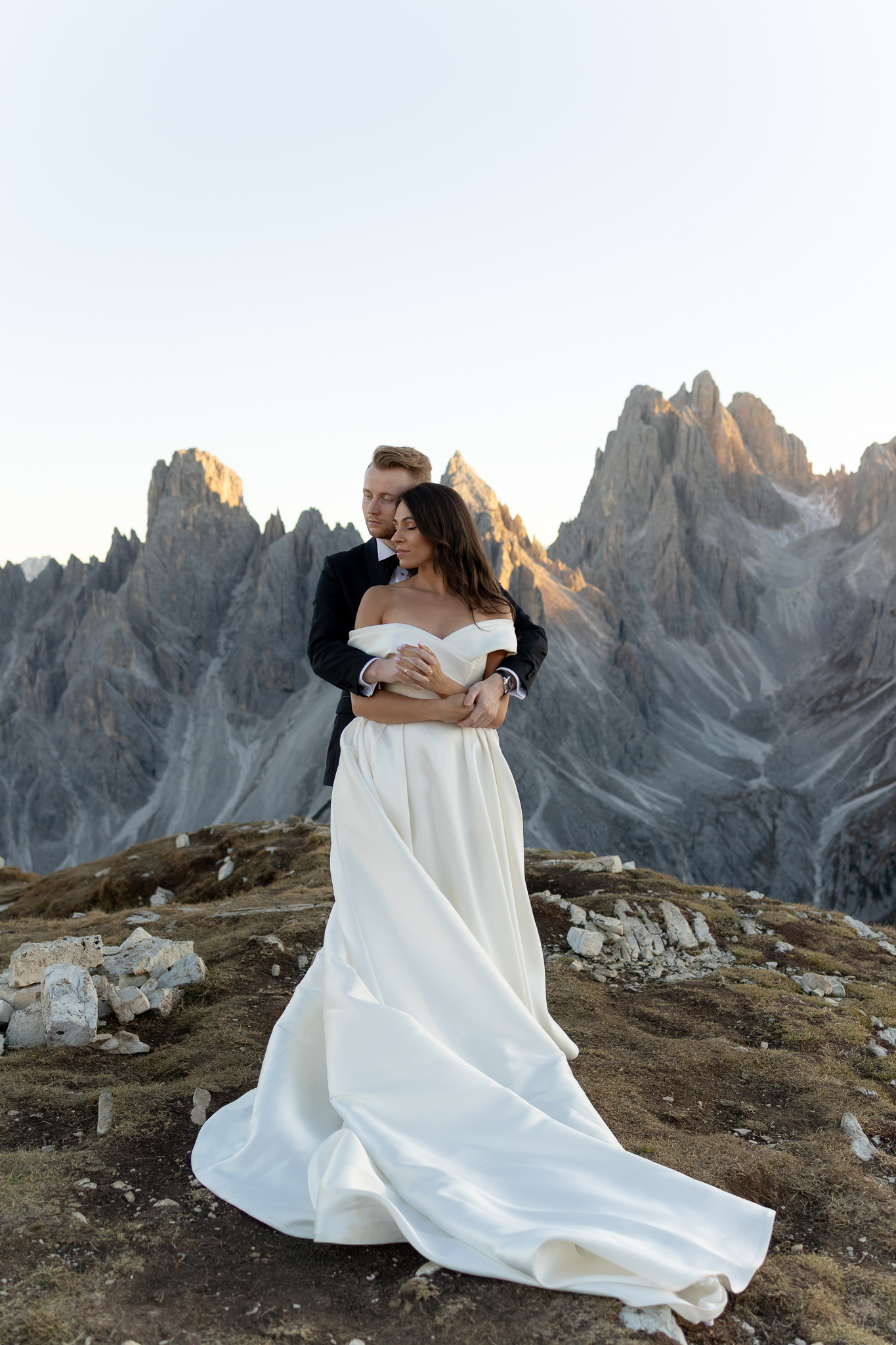
Tre Cime di Lavaredo – monumental mountains at sunset
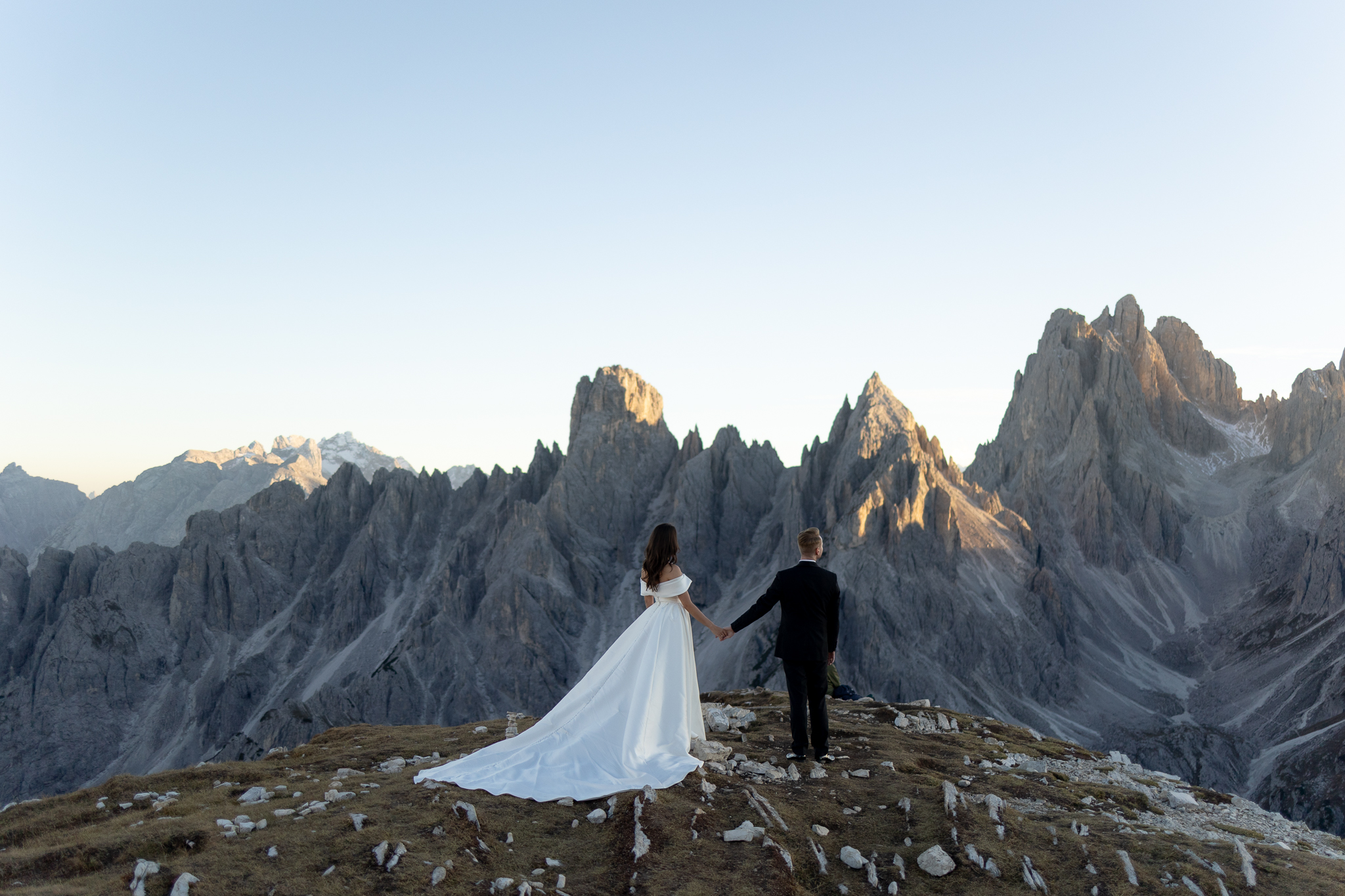
We spent the second part of the day at Tre Cime di Lavaredo.
It is a completely different setting from Lago di Braies. Instead of a lake, there are vast mountain spaces, rock walls, sharp peaks and valleys stretching to the horizon.
It took us about 30 minutes to walk from the car park to the spot we had chosen. The route wasn’t very long, but in places it led over steep ground, and one section ran close to a cliff edge.
That is why we strongly recommend comfortable hiking boots. Elegant shoes can be carried and put on only once you are somewhere safe, during the photographs. With a dress with a long train, it is also worth thinking about pinning it up for the walk.
Our meadow offered something special: two completely different views.
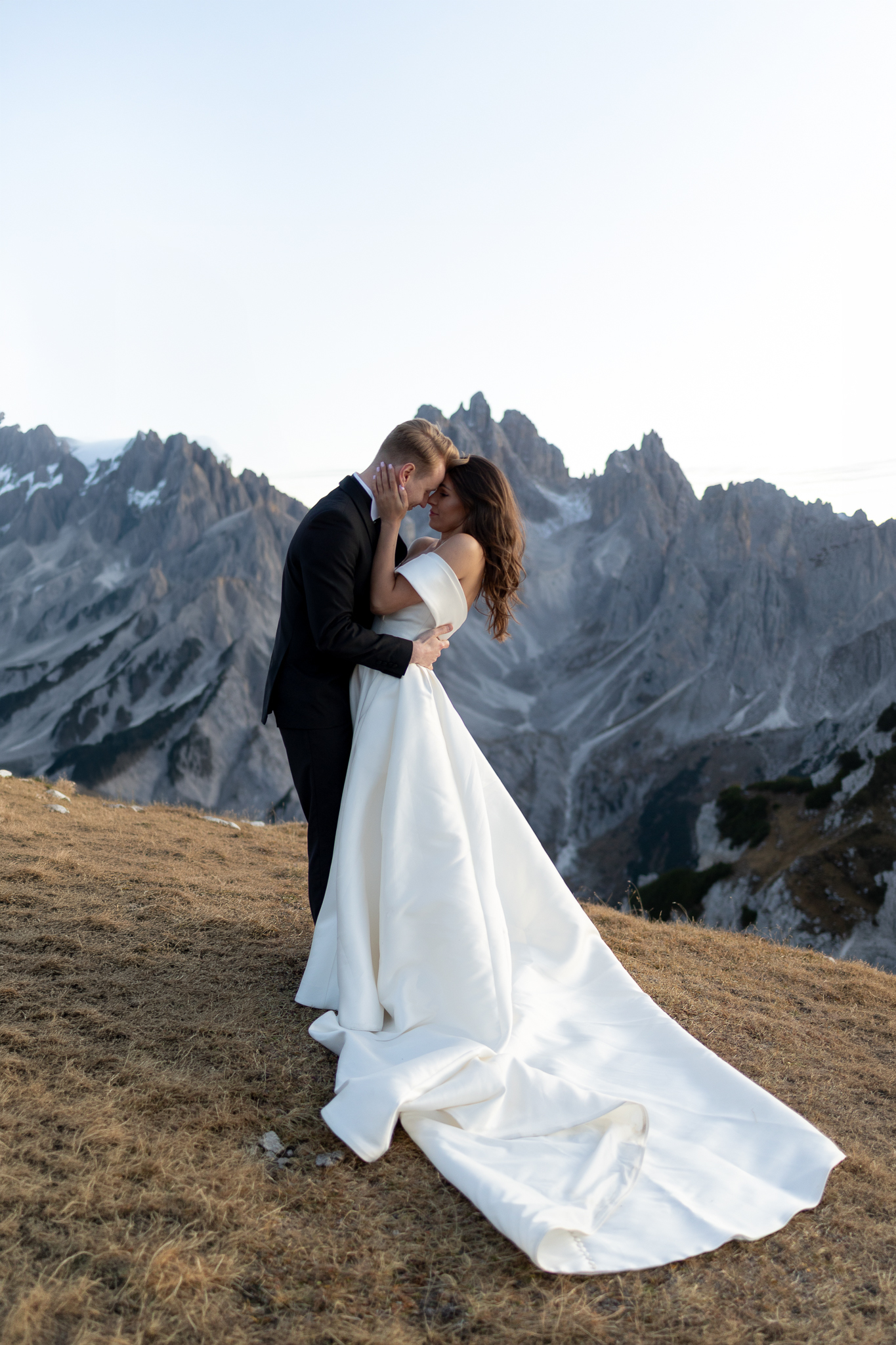
On one side we had the monumental walls of Tre Cime, which took on warm, orange tones in the light of the setting sun. Turning around, we saw a wide valley and jagged peaks, much cooler in colour, with single patches of rock lit by the last rays of sun.
All it took was changing the shooting direction to get frames of a completely different character.
It is one of the reasons we love photographing in the mountains. We don’t need many locations when one well-chosen spot offers so much variety.
Sunset, blue hour and the walk back in the dark
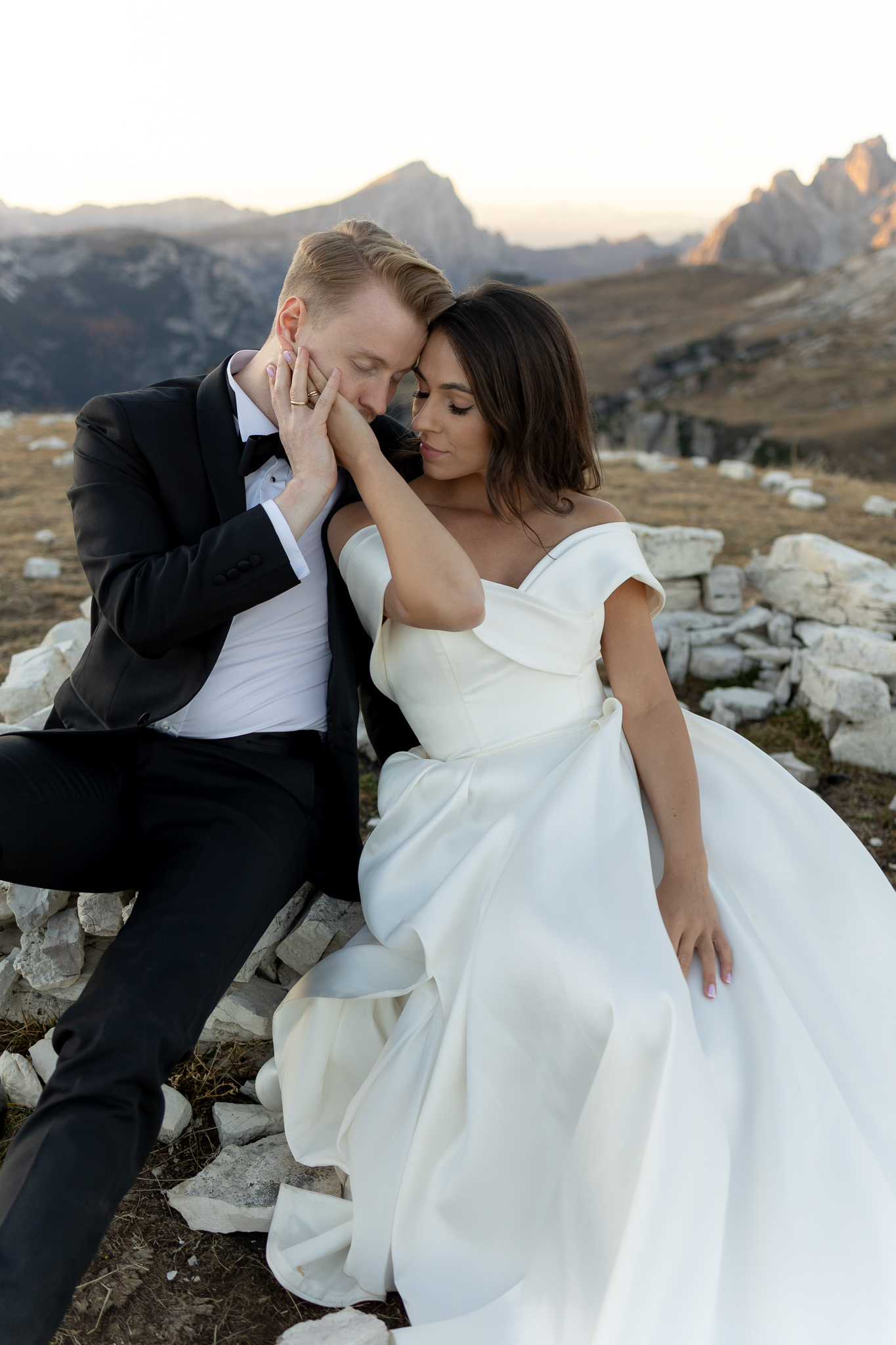
We found the most beautiful light at Tre Cime at the end of the day. Once the sun was low, the rocks began to take on warm colours and the valleys gradually sank into shadow.
It is also worth making use of blue hour – the short period after sunset when the light turns cooler and the sky takes on shades of blue.
You do need to be careful, though. In the mountains darkness falls quickly, especially in late autumn, and walking back along a rocky path without proper lighting can be dangerous.
We strongly recommend bringing head torches, warm clothes and plenty of spare time. The more difficult sections of the route, especially those close to cliff edges, are best covered before dark.
We did our session on 22 October and met only a few people at the viewpoint, mostly hikers. Thanks to that we could photograph calmly, without waiting for an empty frame.
Of course, that doesn’t mean conditions here are always like this in late autumn. At this time of year the Dolomites can bring snow, ice and road restrictions.
Getting around the Dolomites – allow more time
During our session we also learned that even finding the right turn-off can be a challenge. Two or three times we had to turn back because we couldn’t find the road to the car park we had chosen.
So before setting off, it is worth saving the exact location of the car park and checking the route, rather than entering only the name of the viewpoint into the sat nav.
In our opinion, in the Dolomites it is better to choose two locations and make the most of the light than to try to visit the five best-known spots in one day.
Our tip: Plan Lago di Braies for the morning and Tre Cime for the late afternoon and sunset, as long as the weather, trail conditions and road access allow.
02 · Venice
Venice – a wedding session between architecture and fashion
We have visited Venice four or five times, and on these visits we learned one very important thing: if you are planning a wedding session, it isn’t worth spending too much time randomly searching for hidden alleys.
That is exactly the mistake we made during our first session.
We walked away from the Grand Canal and spent almost three hours wandering through narrow streets, looking for something special. We were hoping for unexpected frames, interesting light and places you won’t find on every postcard.
In practice, most of the alleys looked alike. Tall buildings, tight passages and little natural light didn’t give us the possibilities we had hoped for.
Of course, Venice hides many beautiful corners. But from the perspective of a wedding session, when time is limited and the right light matters, such searching doesn’t always make sense.
Today we would plan this session completely differently.
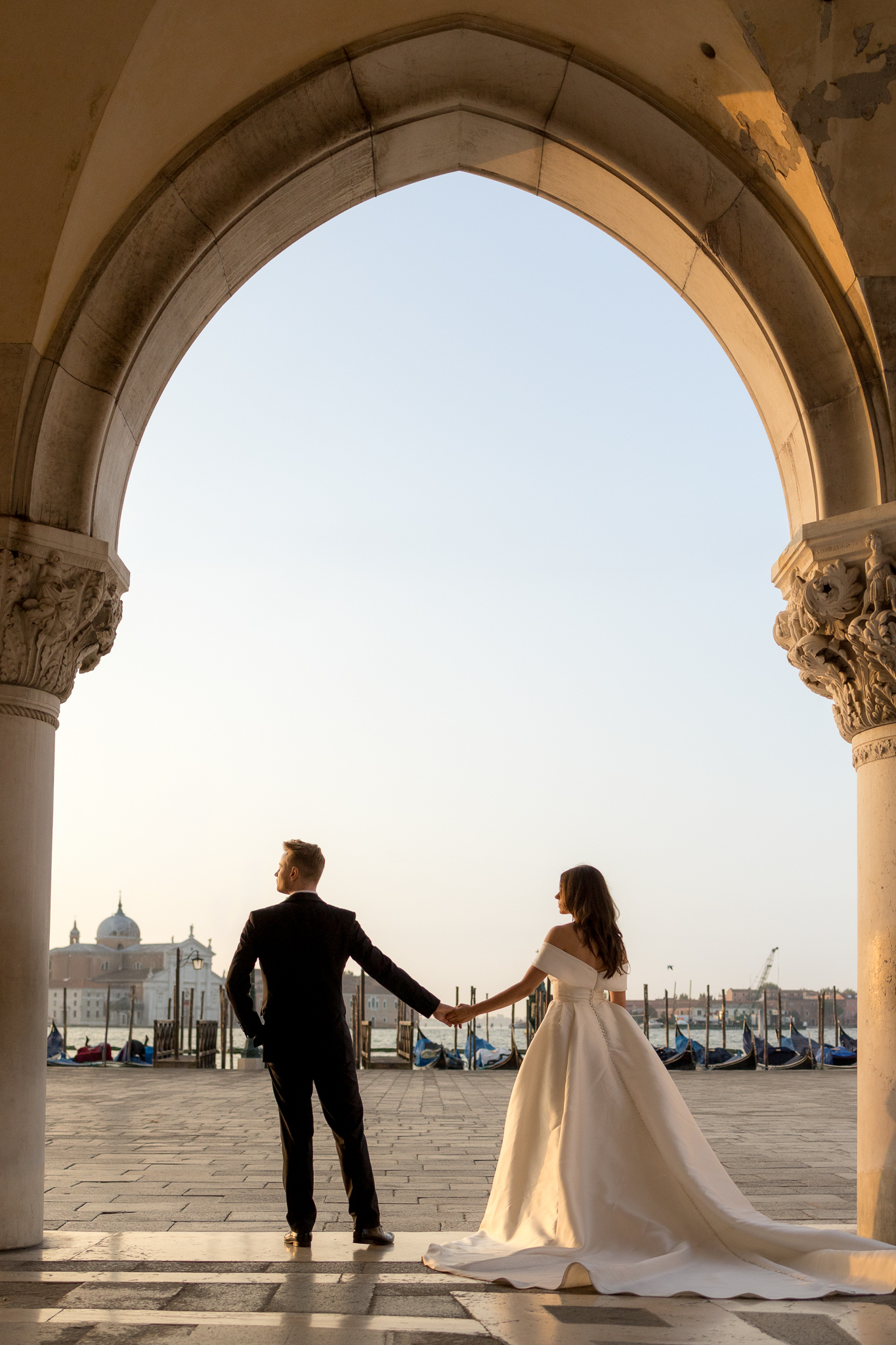
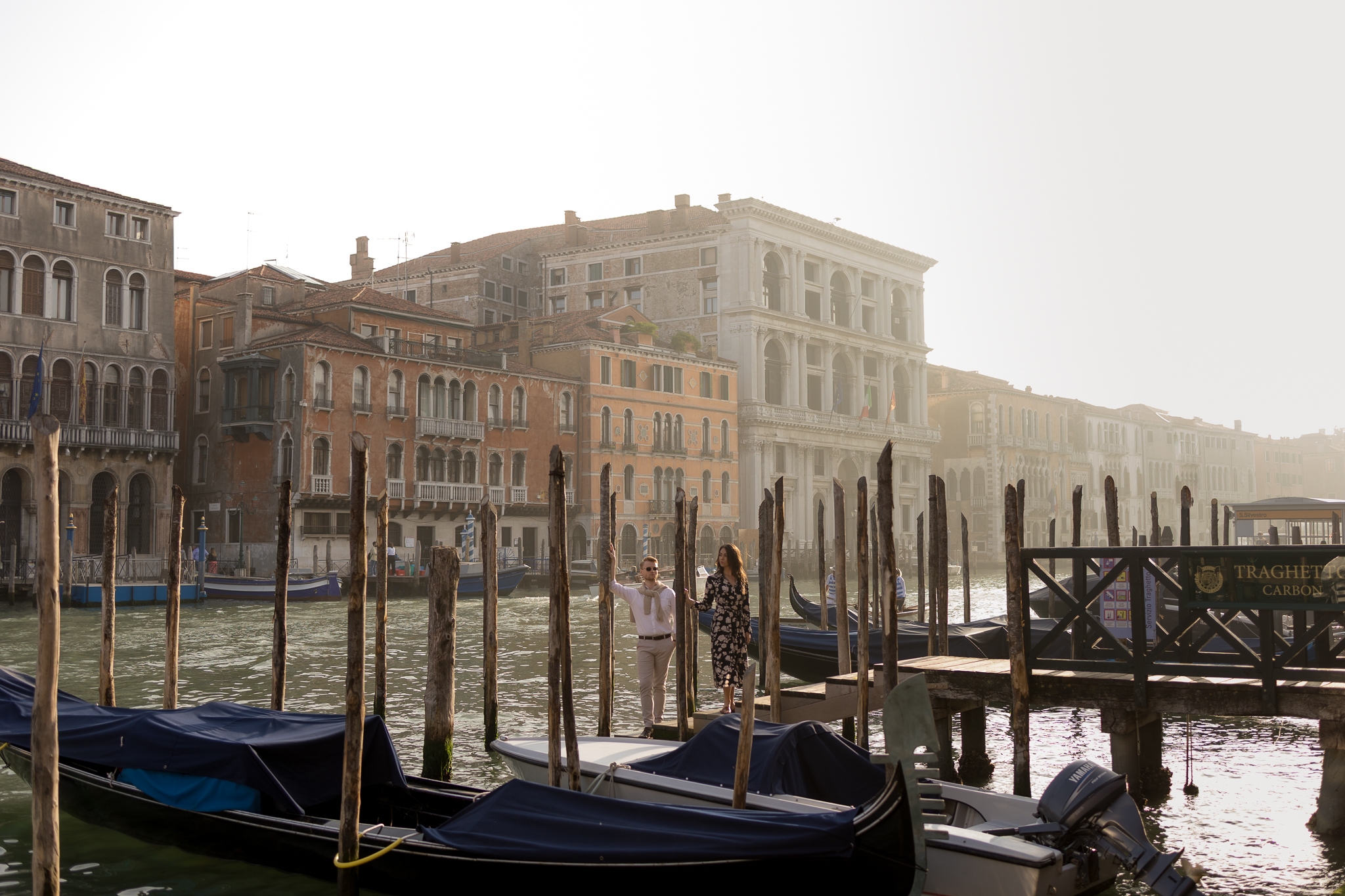
We would focus on the Grand Canal, St Mark’s Square and the key spots around them. This is where you find the monumental architecture, bridges, gondolas, palazzi and iconic views instantly associated with Venice.
You don’t need to discover yet another forgotten alley to create an original photograph. Light, composition and the way you use a well-known space matter far more.
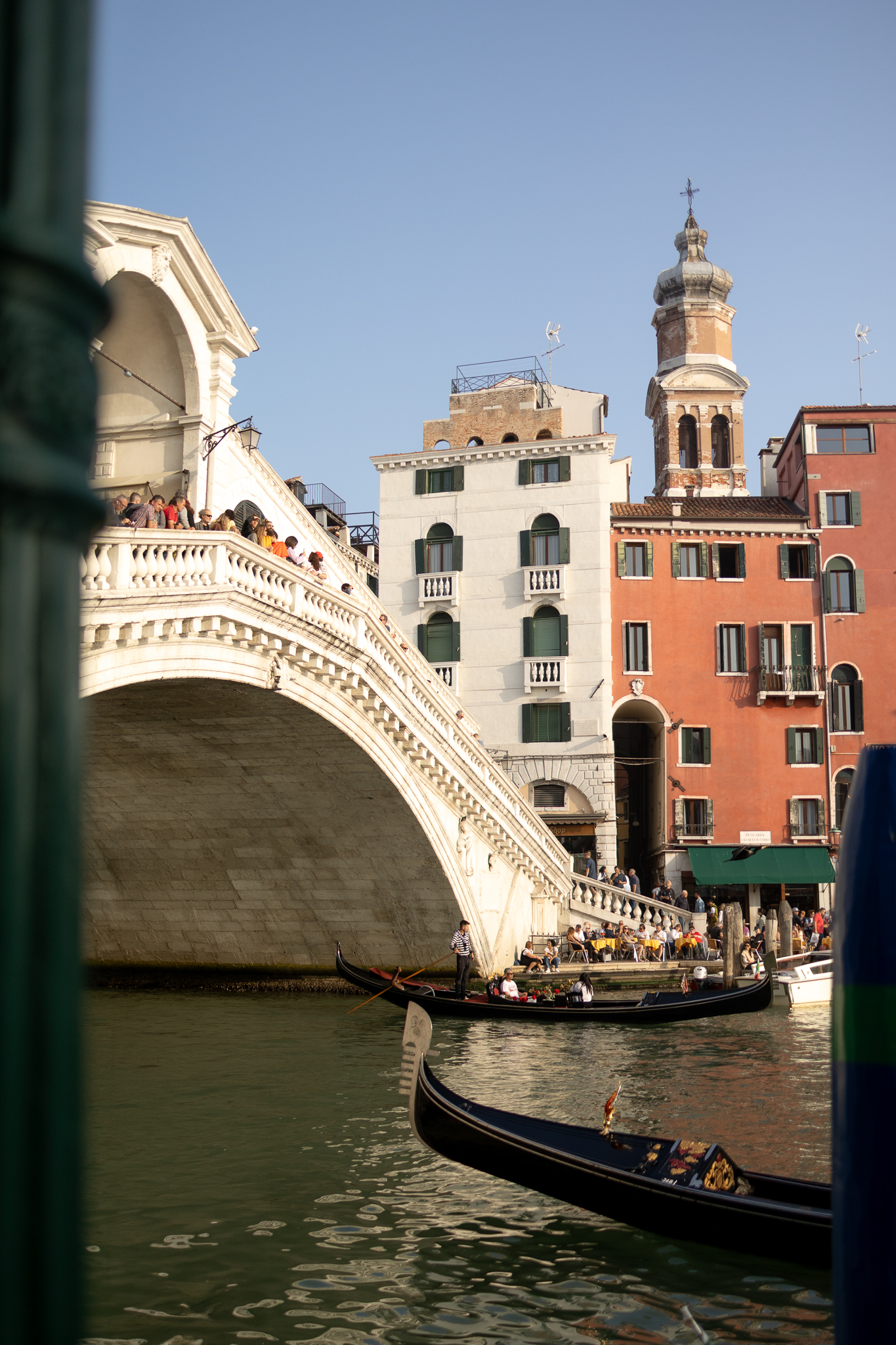
Ponte di Rialto – the first photographs at dawn
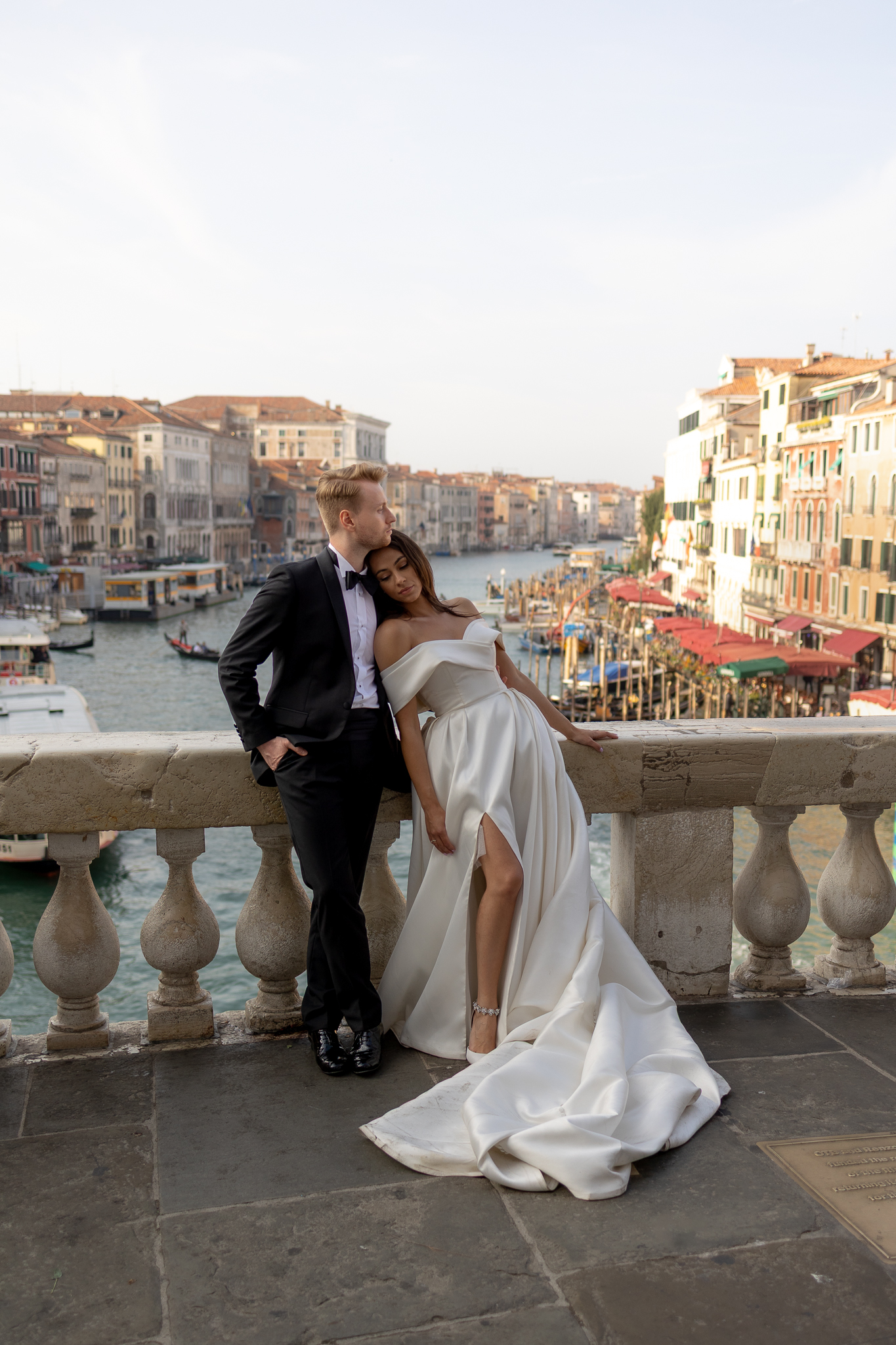
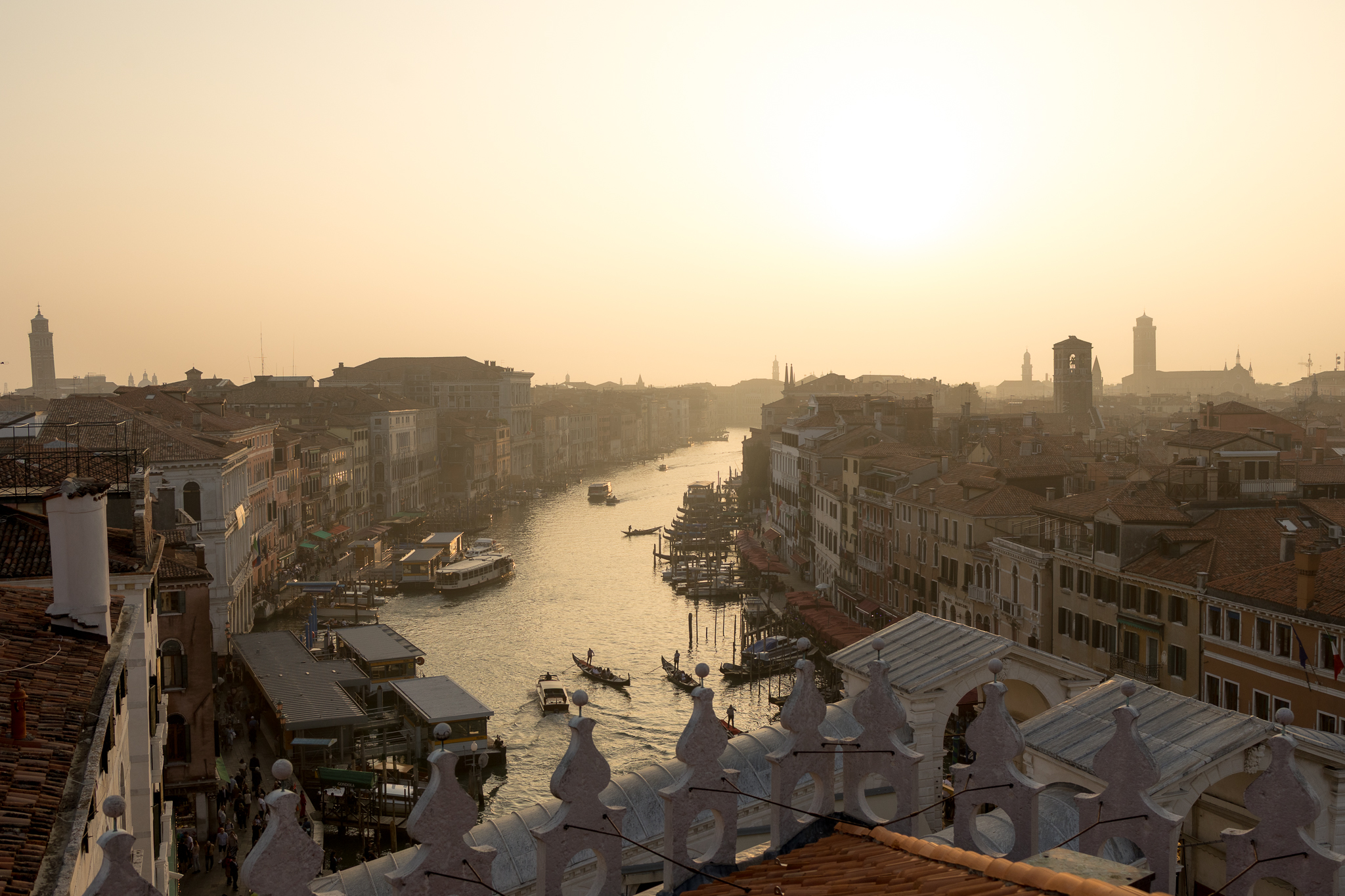
If you are planning a wedding session in Venice, we strongly recommend starting before sunrise.
One of the first places worth visiting is the Ponte di Rialto, the distinctive marble bridge over the Grand Canal.
It is one of the most recognisable symbols of Venice, and at the same time a place that fills up with tourists very quickly.
In our experience, as little as an hour after sunrise it can get so busy that photographing freely becomes difficult.
That’s why we wouldn’t leave the Rialto for later.
Piazza San Marco – arcades, cafés and exceptional light
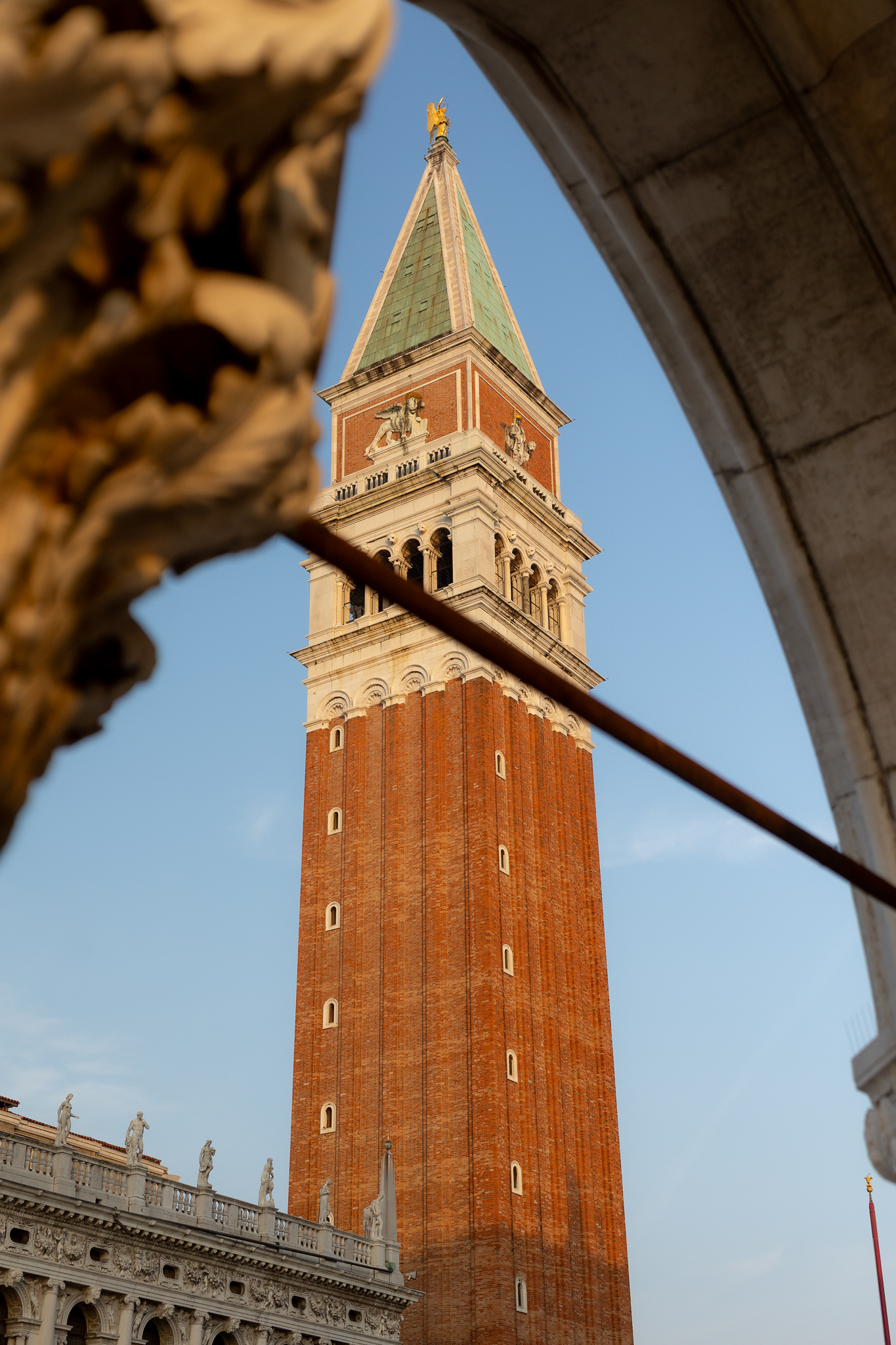
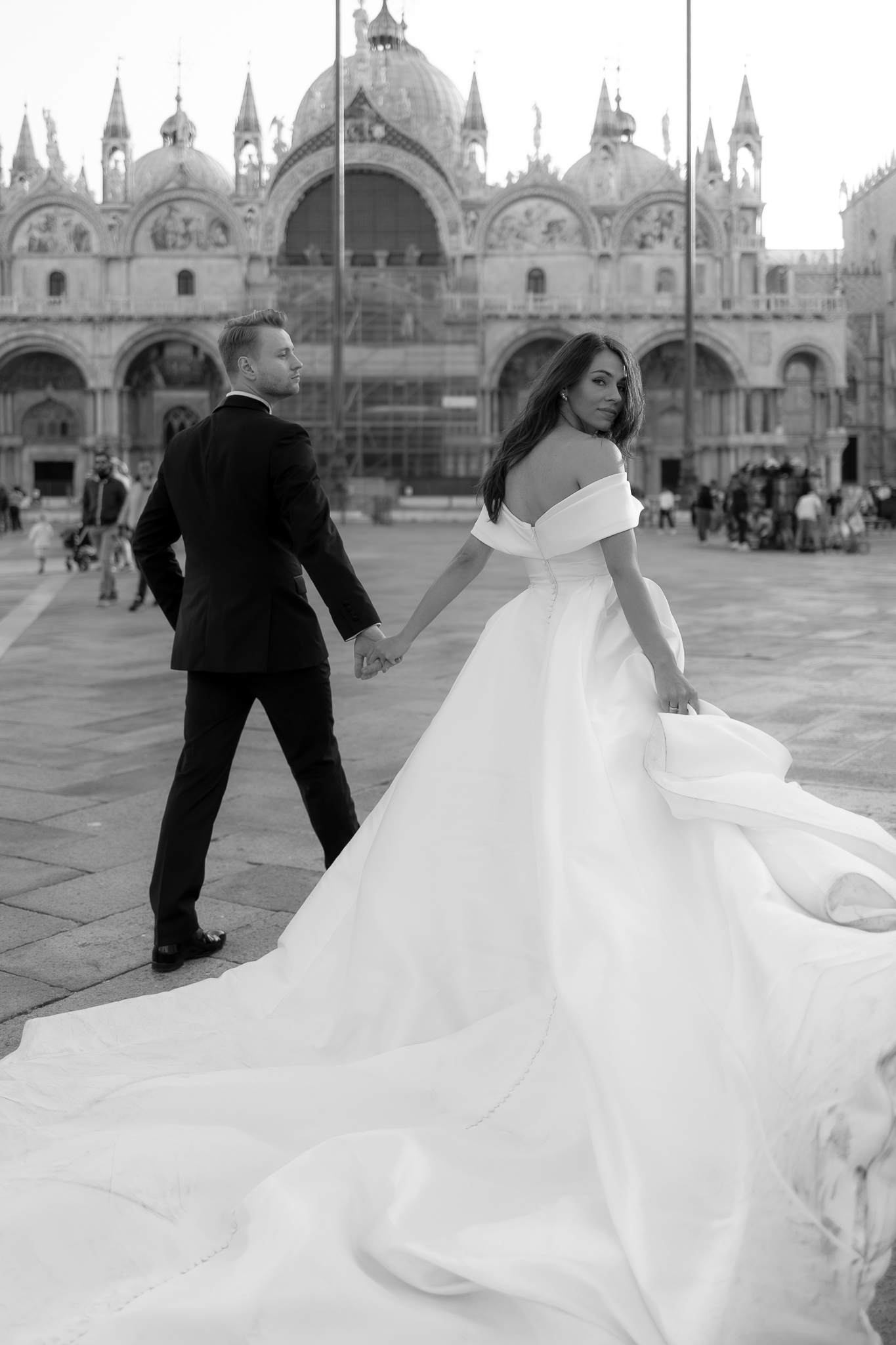
Another must-see place is Piazza San Marco.
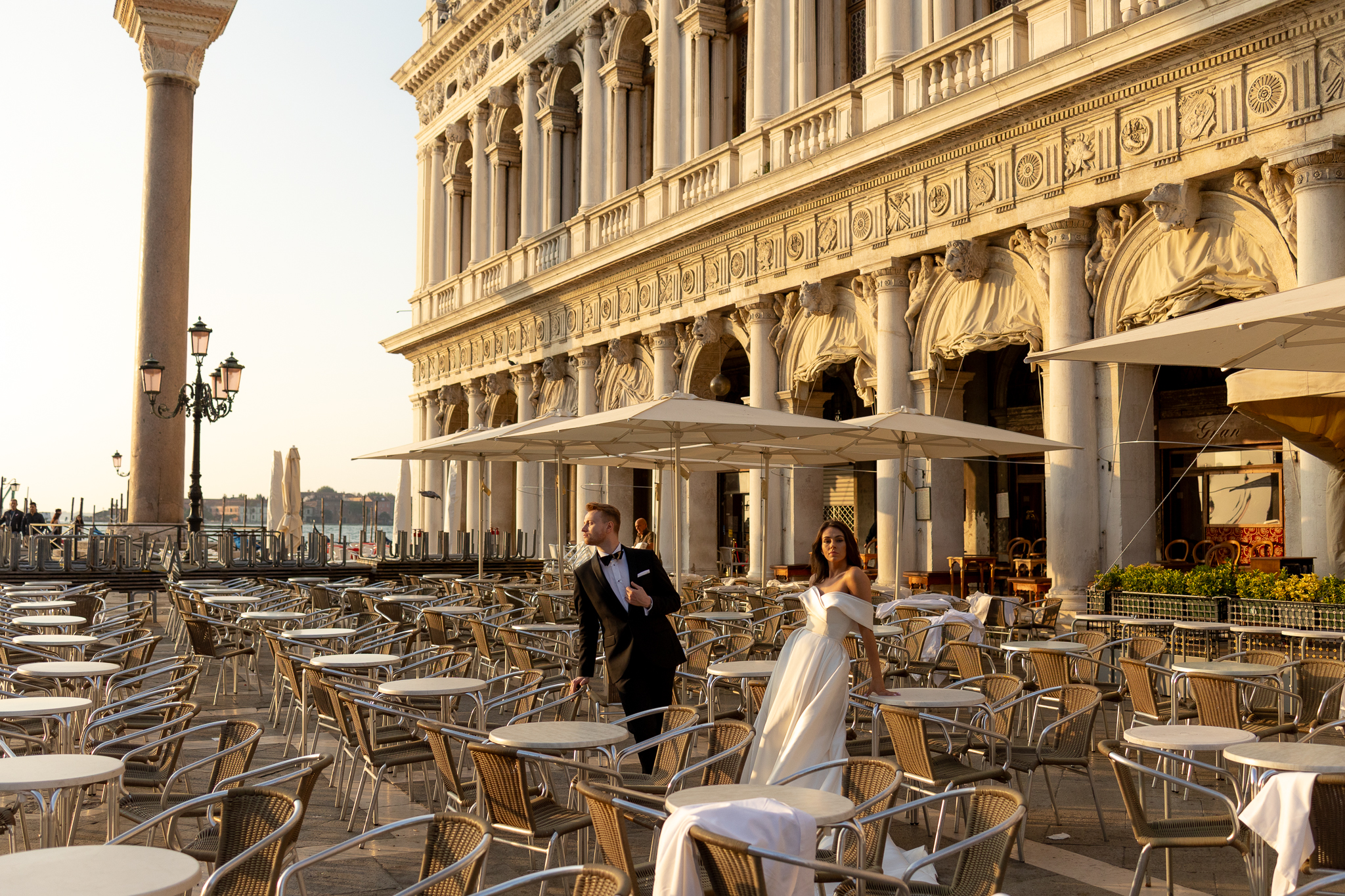
Although the square and its monumental architecture are hugely impressive, from a photographic point of view we especially love the arcades and historic cafés around it.
In the morning, light falls between the arches, creating distinct patches of brightness and shadow. These are perfect conditions for elegant, fashion-inspired portraits.
It is also worth paying attention to the arched café windows, the awnings and the rows of tables and chairs. These seemingly ordinary elements create an incredibly stylish backdrop that works beautifully in fashion editorial photography.
The staff aren’t always enthusiastic about it. Keep in mind that these are working cafés, so it is worth photographing efficiently, not moving furniture around and not getting in the waiters’ way.
In our experience, the area around St Mark’s Square offers so many possibilities that you can create very varied photographs here without constantly moving around the city.
Can you avoid the tourists in Venice?
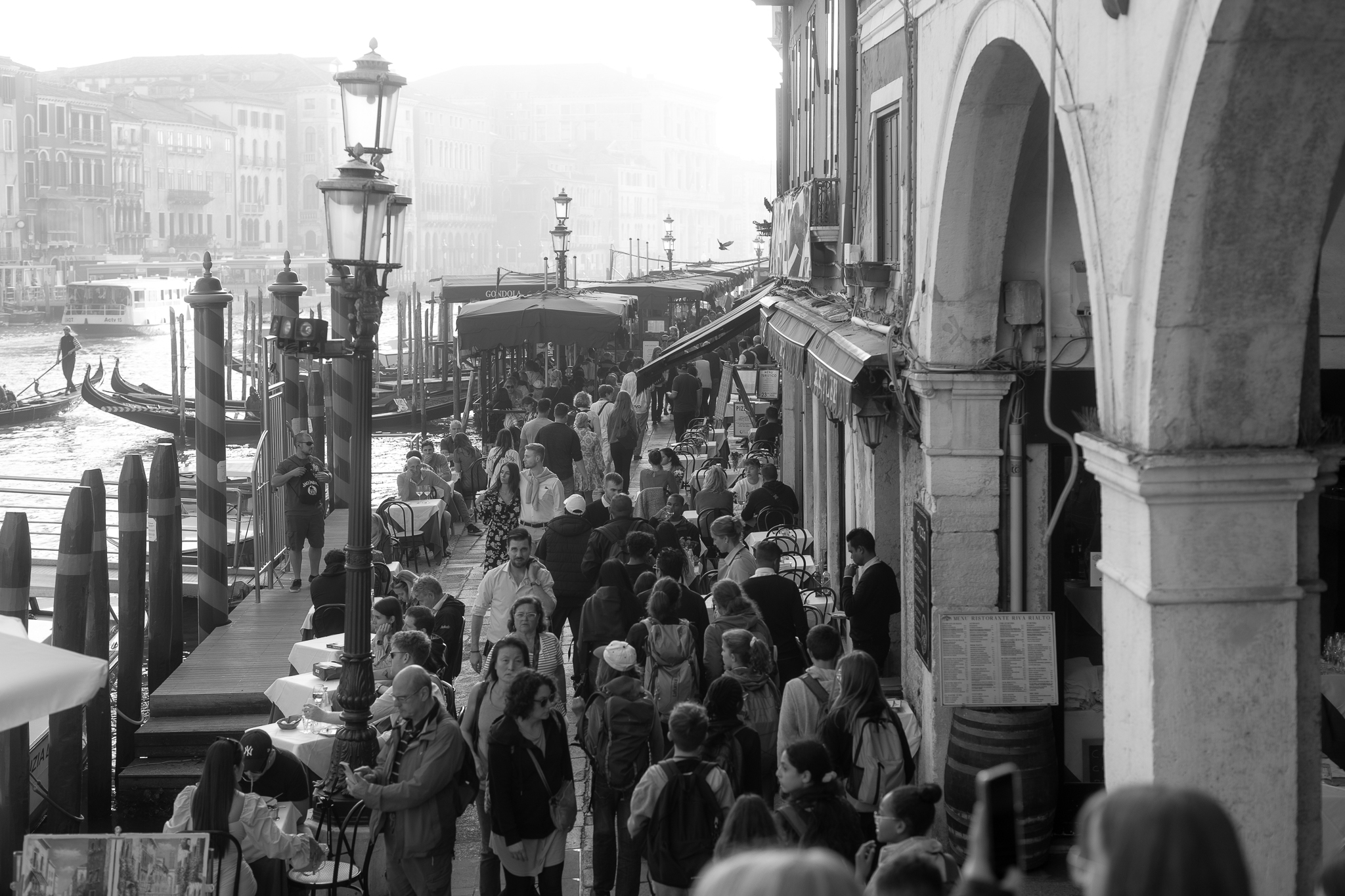
Venice is extremely popular, and you have to accept the presence of tourists.
During our visits we noticed that after 8 am you can no longer expect empty squares, bridges and streets.
That doesn’t mean the end of the session, though.
Instead of trying to remove people from the frame at all costs, we can treat them as part of the urban landscape. Passers-by, the bustle of the streets and the daily life of the city can give the photographs a very interesting, documentary feel.
Not every photograph has to look as if the whole city had been closed just for the couple.
The Fondaco dei Tedeschi rooftop terrace
Right next to the Ponte di Rialto stands the Fondaco dei Tedeschi, a historic building also known for its rooftop terrace with a panoramic view of Venice.
During our earlier visits, access to the terrace required booking a specific time slot. Visits were limited to about 15 minutes, so the photography had to be well planned.
It offered a fascinating perspective over the city’s rooftops and the Grand Canal.
Keep in mind, however, that access to the terrace changed after the department store closed in 2025. Before planning a session, be sure to check whether visits are currently possible and on what terms.
Gondola or motorboat?
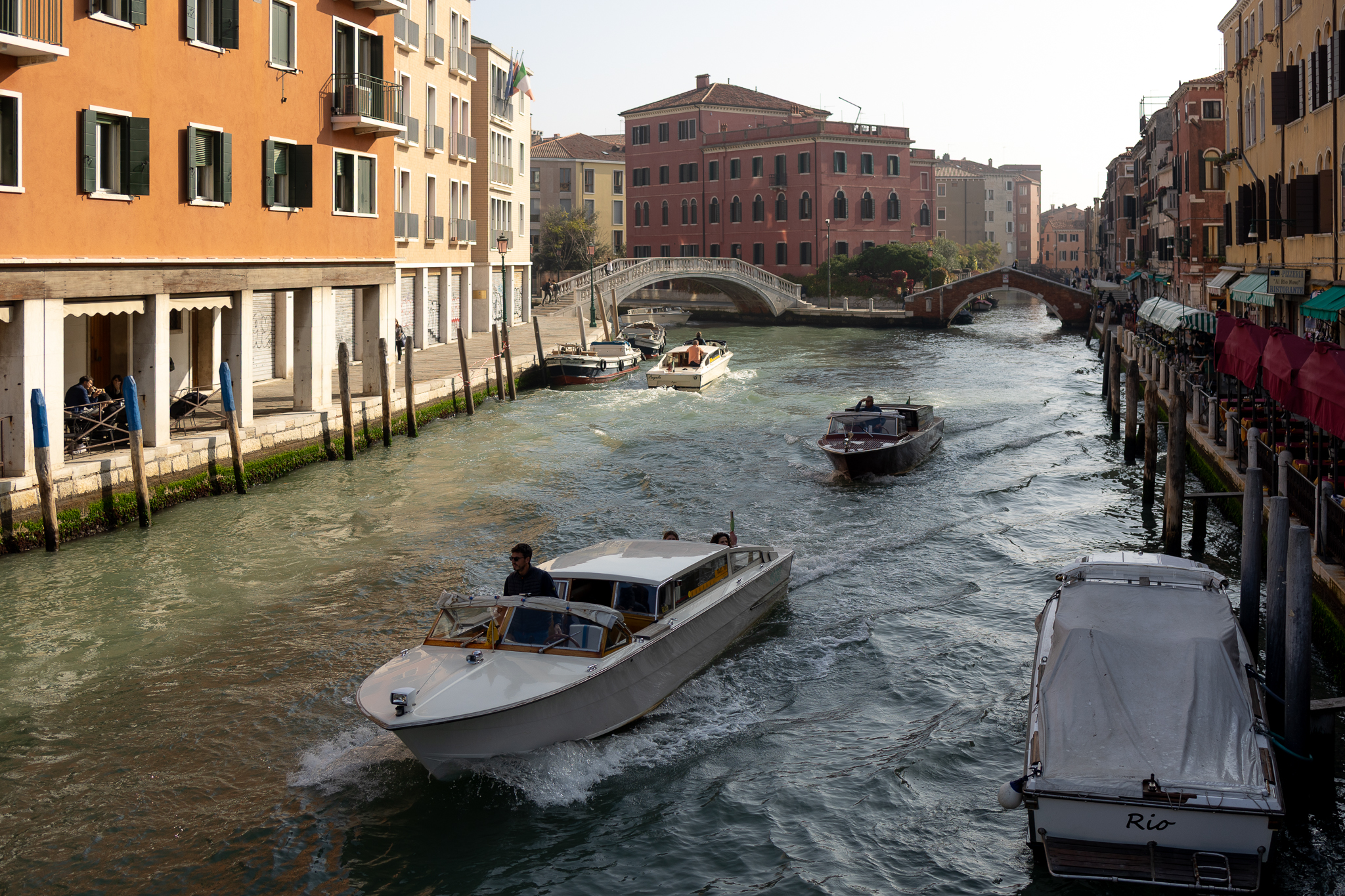
During our visits we have used both gondolas and motorboats.
If we had to choose just one of these options again, we would definitely go for the motorboat.
The gondola is of course a symbol of Venice, but from a photographic point of view it gives us relatively little freedom.
A motorboat lets you move between locations more efficiently and photograph from different perspectives. With a well-planned private trip, we can make use of wide views of the city’s architecture and create much more varied photographs.
Venice at sunset
If you plan to stay in Venice until the evening, it is worth making use of the light of the setting sun as well.
We especially love the small jetties and gondola stations, from which you can photograph towards the sun, using the water and the iconic architecture as a backdrop.
It is a completely different mood from the morning photographs at the Rialto or under the arcades of St Mark’s Square.
Our tip: photograph the most important, recognisable places at dawn. Later, make use of the city’s bustle, architectural details and the water. Don’t waste the best hours randomly searching for yet more alleys.
03 · Lake Como
Lake Como – villas, gardens and a wedding session on a boat
We have been to Lake Como many times, both for weddings and for photo sessions. And if we had to give one most important piece of advice about photographing in this region, it would be very simple:
It is worth setting aside part of the budget for a beautiful villa.
Of course, Lake Como itself has a stunning landscape. There are mountains, water, picturesque towns and elegant architecture.
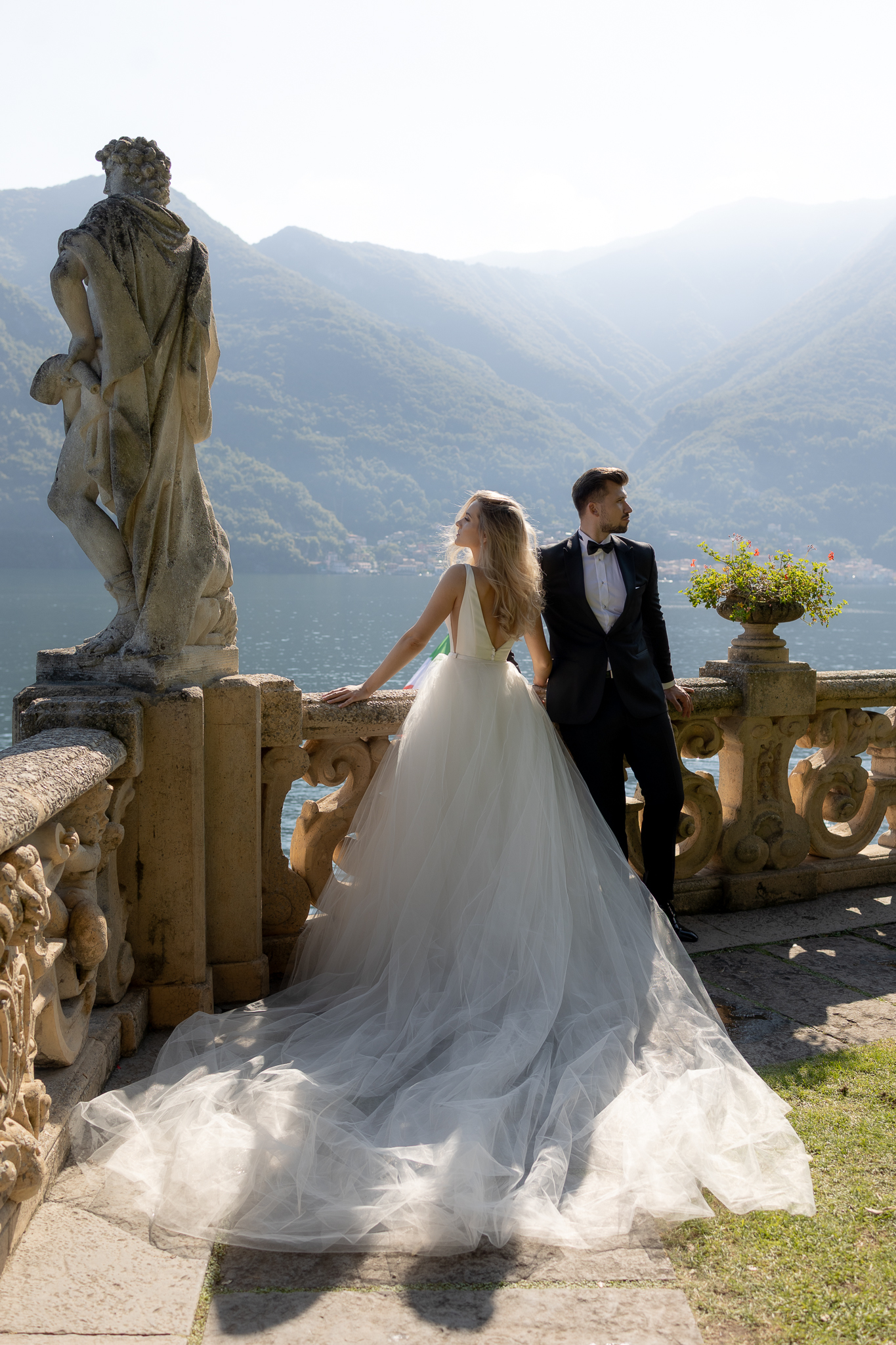
But for us the region’s greatest photographic attraction is its historic villas, their gardens and their views of the lake.
Keep in mind that a large part of the most beautiful stretches of shoreline lies within private estates. That is why spontaneously searching for spectacular spots that are free to access can end in disappointment.
That doesn’t mean, though, that you can’t create beautiful photographs here without a large budget.
Bellagio – our choice for a session without renting a villa
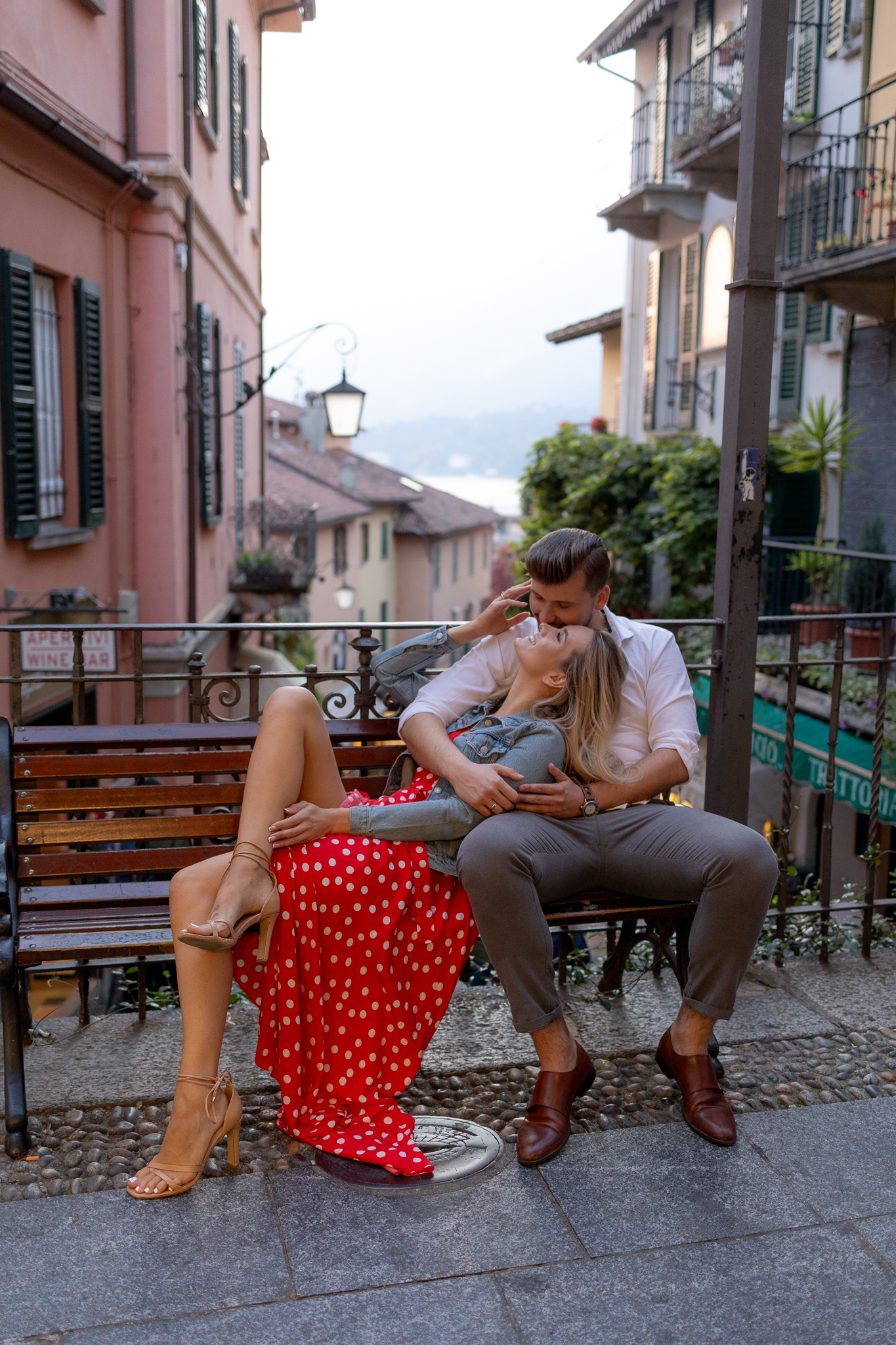
If you aren’t planning a paid session at one of the historic residences, we especially recommend Bellagio.
Of the publicly accessible places on Lake Como that we know, this is where we found some of the most interesting photographic possibilities.
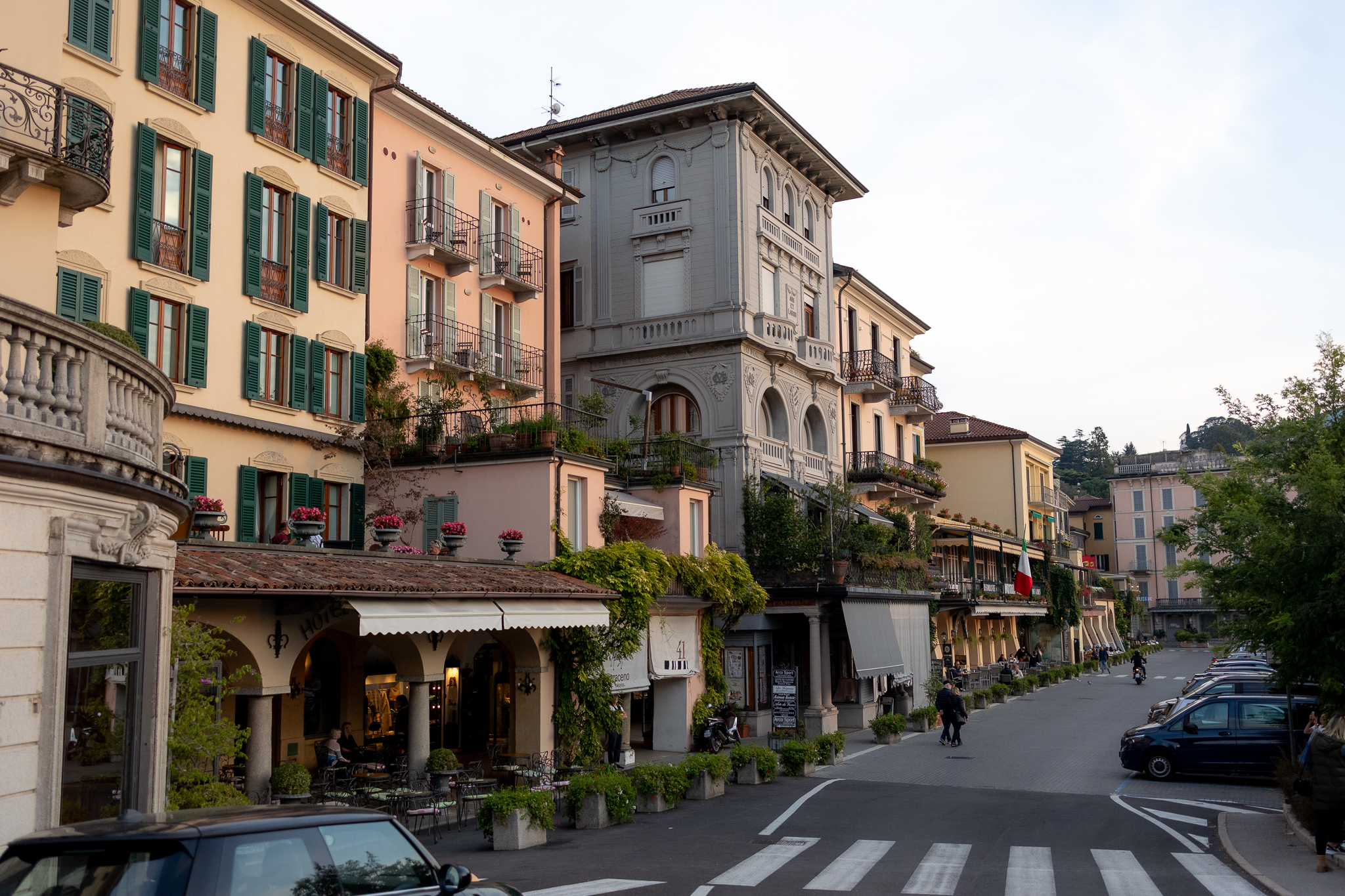
Bellagio offers beautiful long stairways with lake views, colourful façades, charming shop signs, narrow streets and elegant architecture.
We also love the harbour area and the jetties, which let you photograph with the water and mountains in the background.
Importantly, compared with Varenna we found more space here to photograph freely. It was easier to choose a perspective and find a spot where the couple wasn’t surrounded by tourists.
Bellagio is of course a popular town, so this doesn’t mean there are no crowds at all. But in our experience it gives much more freedom than some other towns on the lake.
Varenna – beautiful but cramped
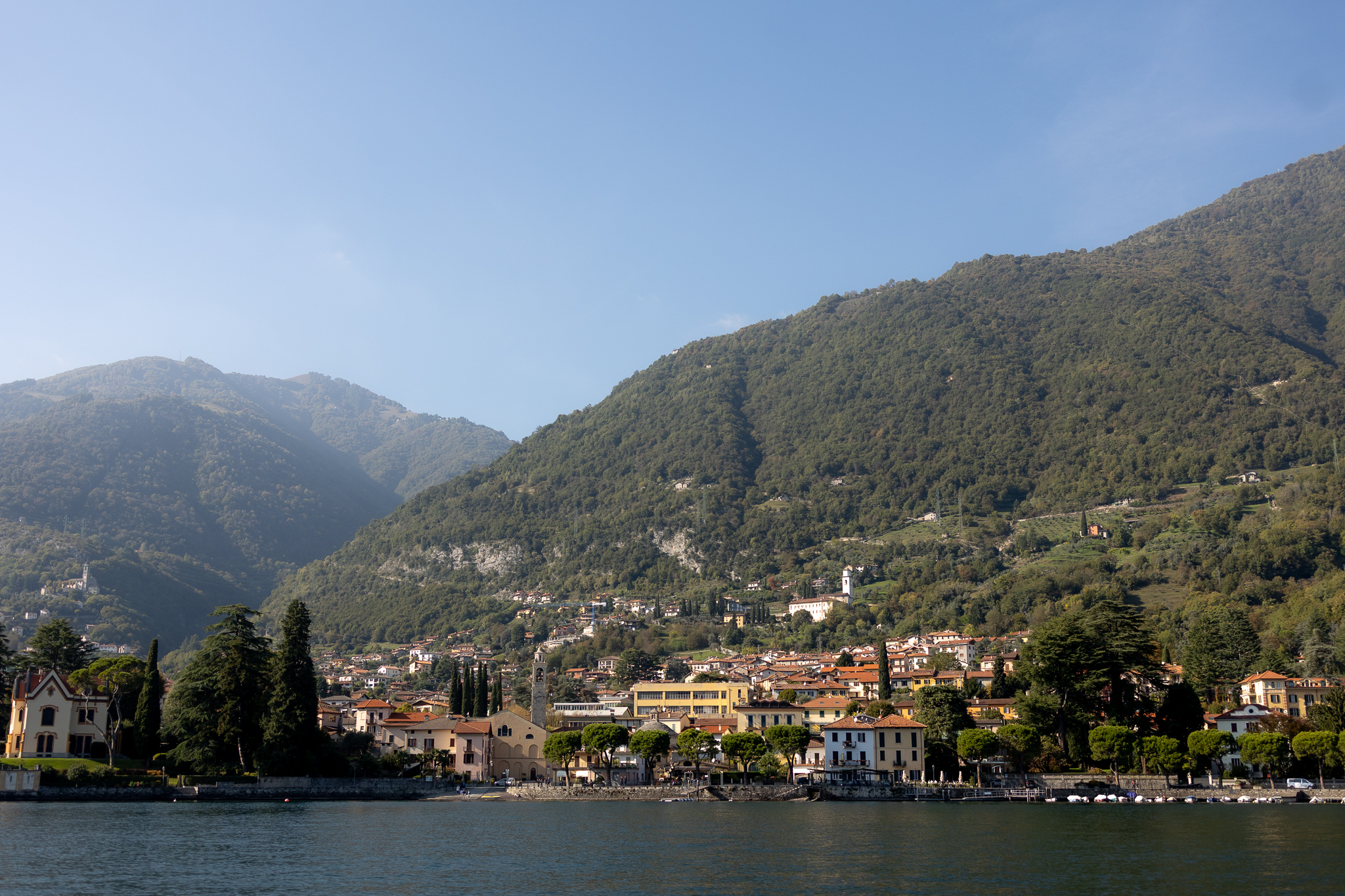
Varenna is undoubtedly charming. Colourful houses, a small harbour and buildings right on the water create a distinctive setting.
From a photographic point of view, however, we have some reservations about this place.
The town is long, narrow and in places very cramped. With more tourists around, it is hard to find space to photograph freely.
Of course, you can create beautiful frames here, but if we had to choose just one publicly accessible town for a session on Lake Como, we would definitely go for Bellagio.
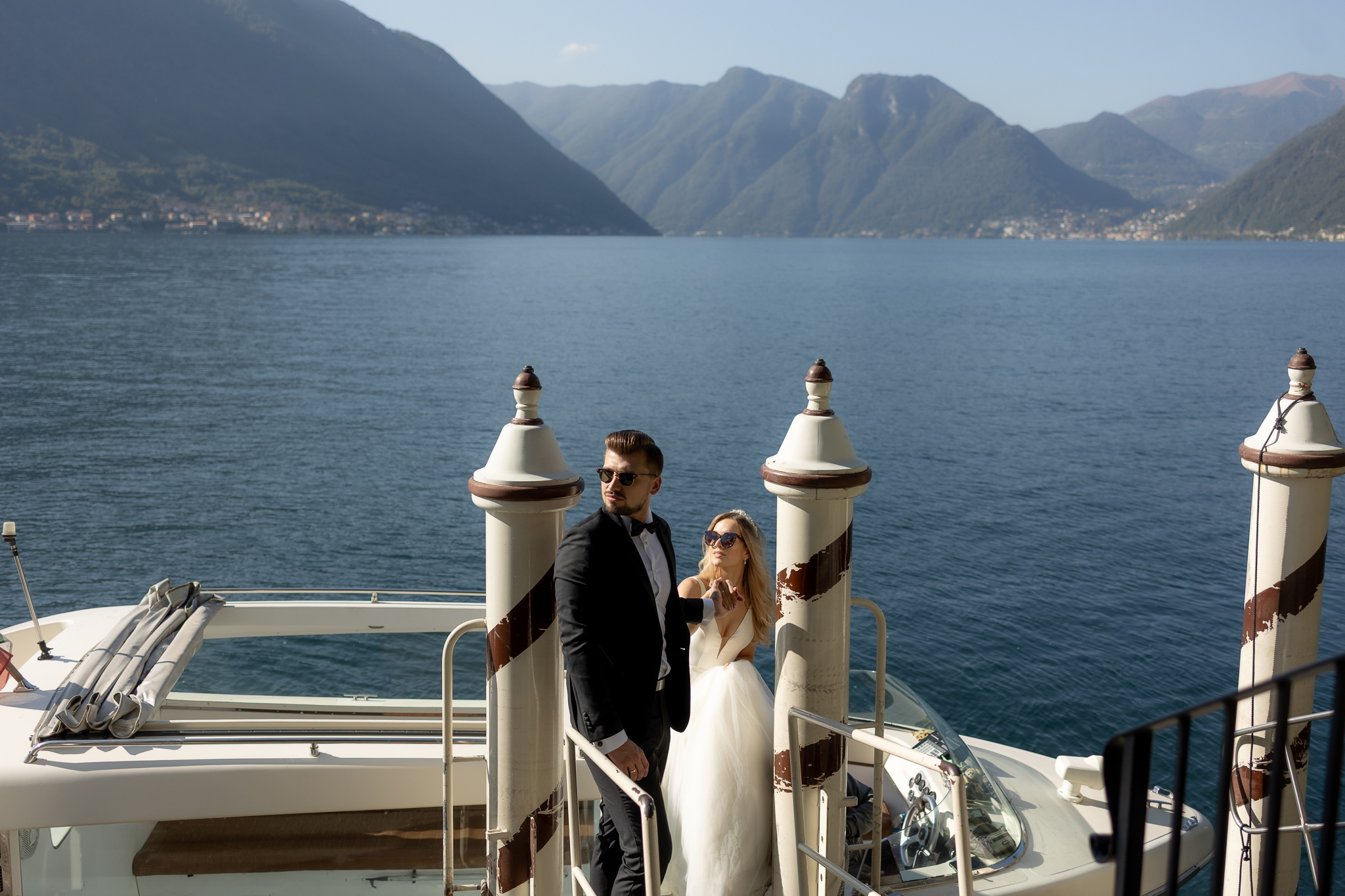
Villa Monastero – a beautiful garden with limitations
One of the best-known places in Varenna is Villa Monastero.
Historic architecture, exotic plants and a garden running along the lake create an elegant setting.
In our opinion, however, the layout of the garden isn’t ideal for photographing at every time of day.
It is long and fairly narrow, with paths winding along the shore. Many of the most interesting compositions use a similar shooting direction.
This matters a great deal in strong, direct sunlight.
In a larger garden we can cross to the other side, change our angle to the light or find a completely different background. At Villa Monastero the options are more limited in this respect.
So when choosing this place, we would pay particular attention to the time of the session and the position of the sun.
It is also worth checking the rules for professional sessions in advance, as wedding photography may require a separate booking and fee.
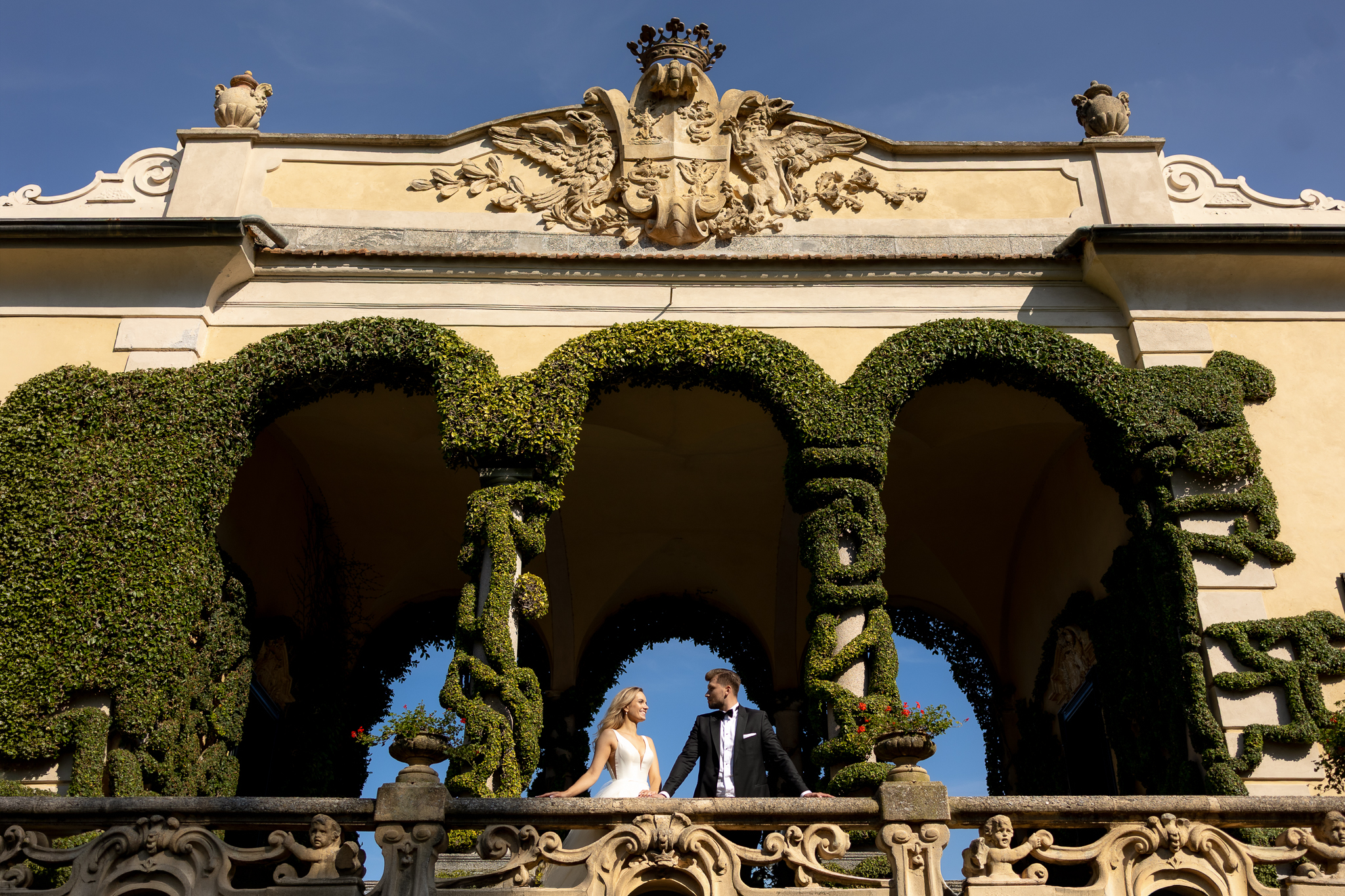
Villa del Balbianello – our absolute favourite
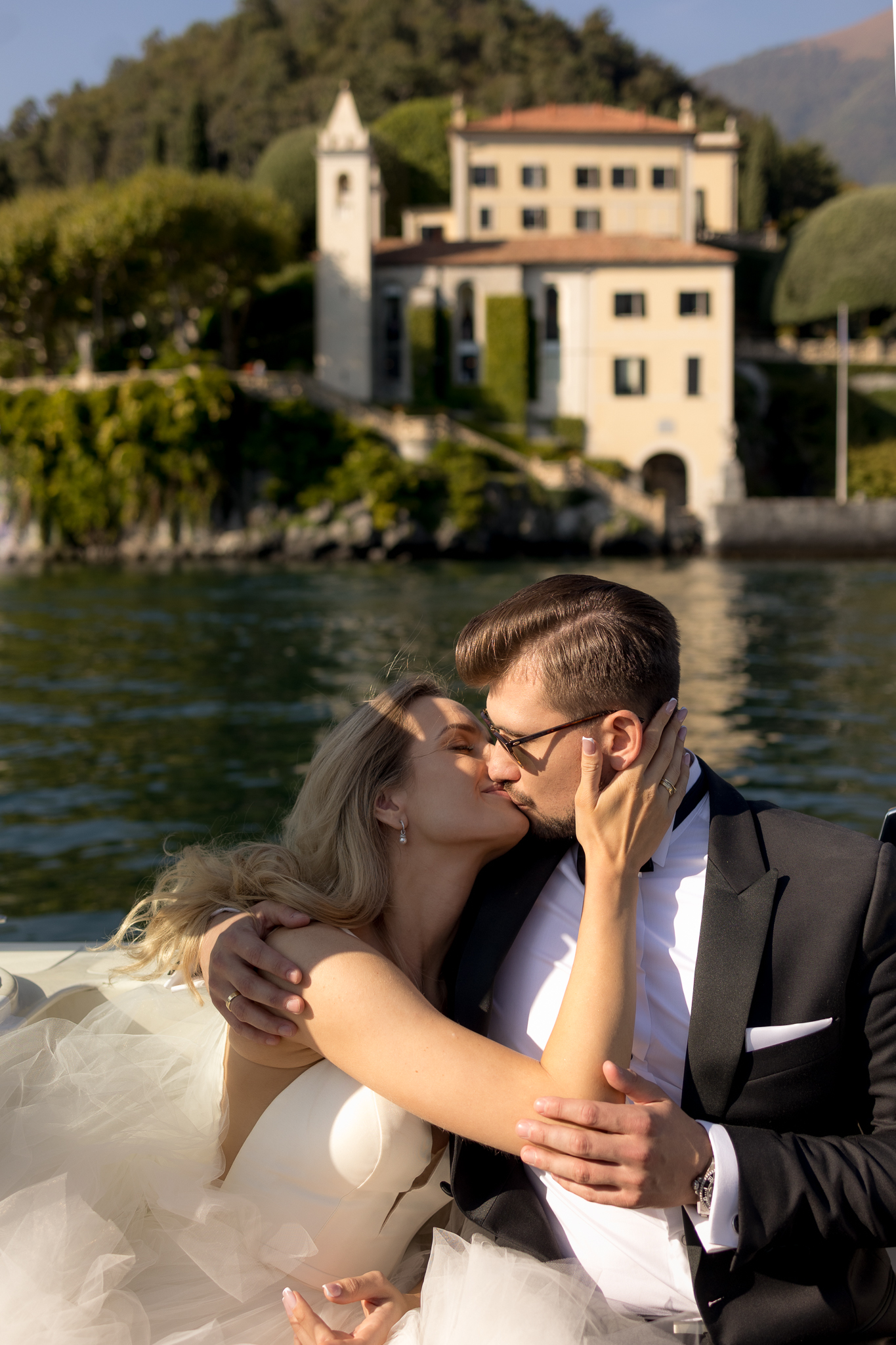
Of all the villas on Lake Como that we have visited, Villa del Balbianello remains the place we are always happy to return to.
The greatest advantage of this estate is the enormous variety of its spaces.
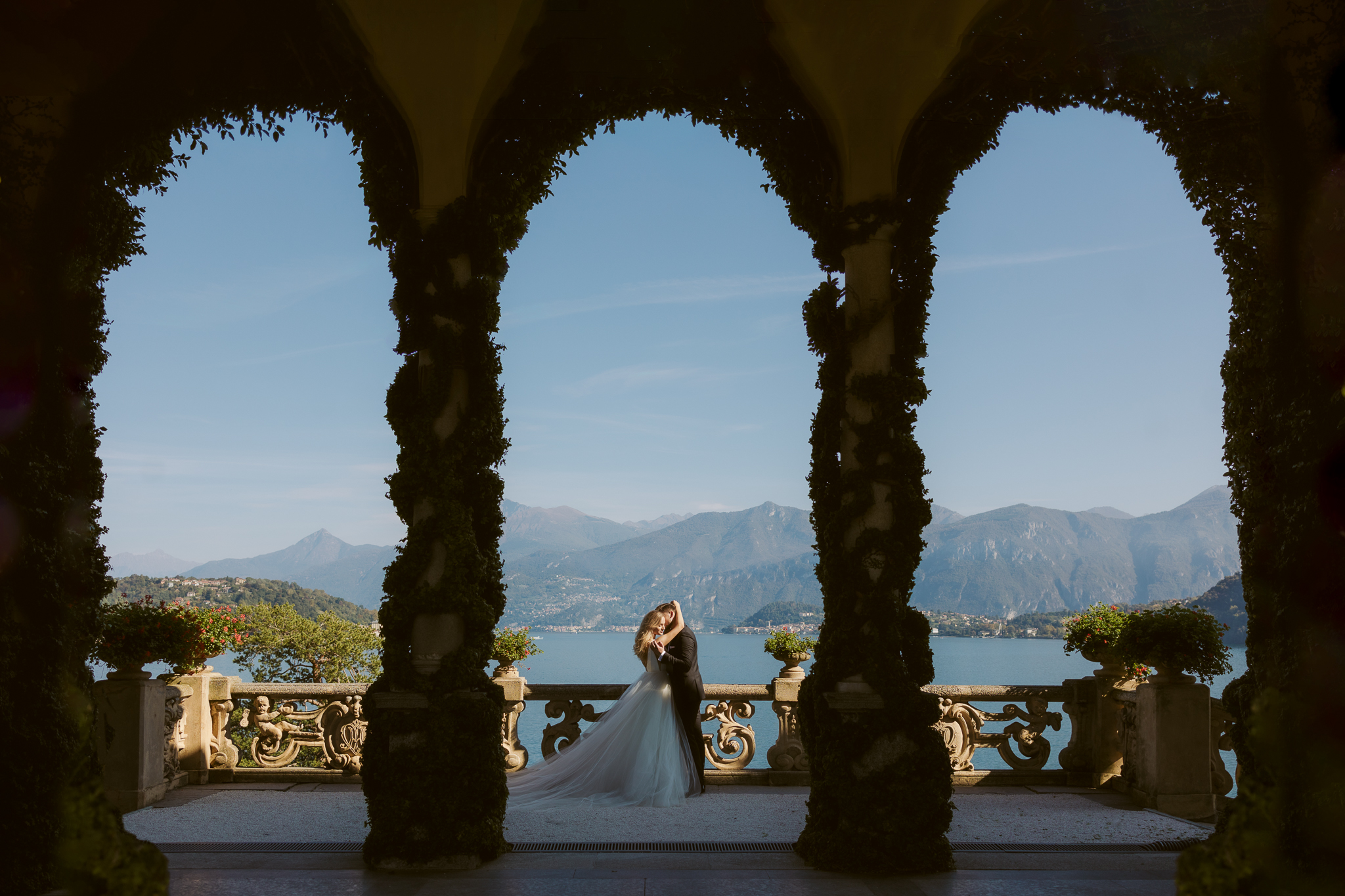
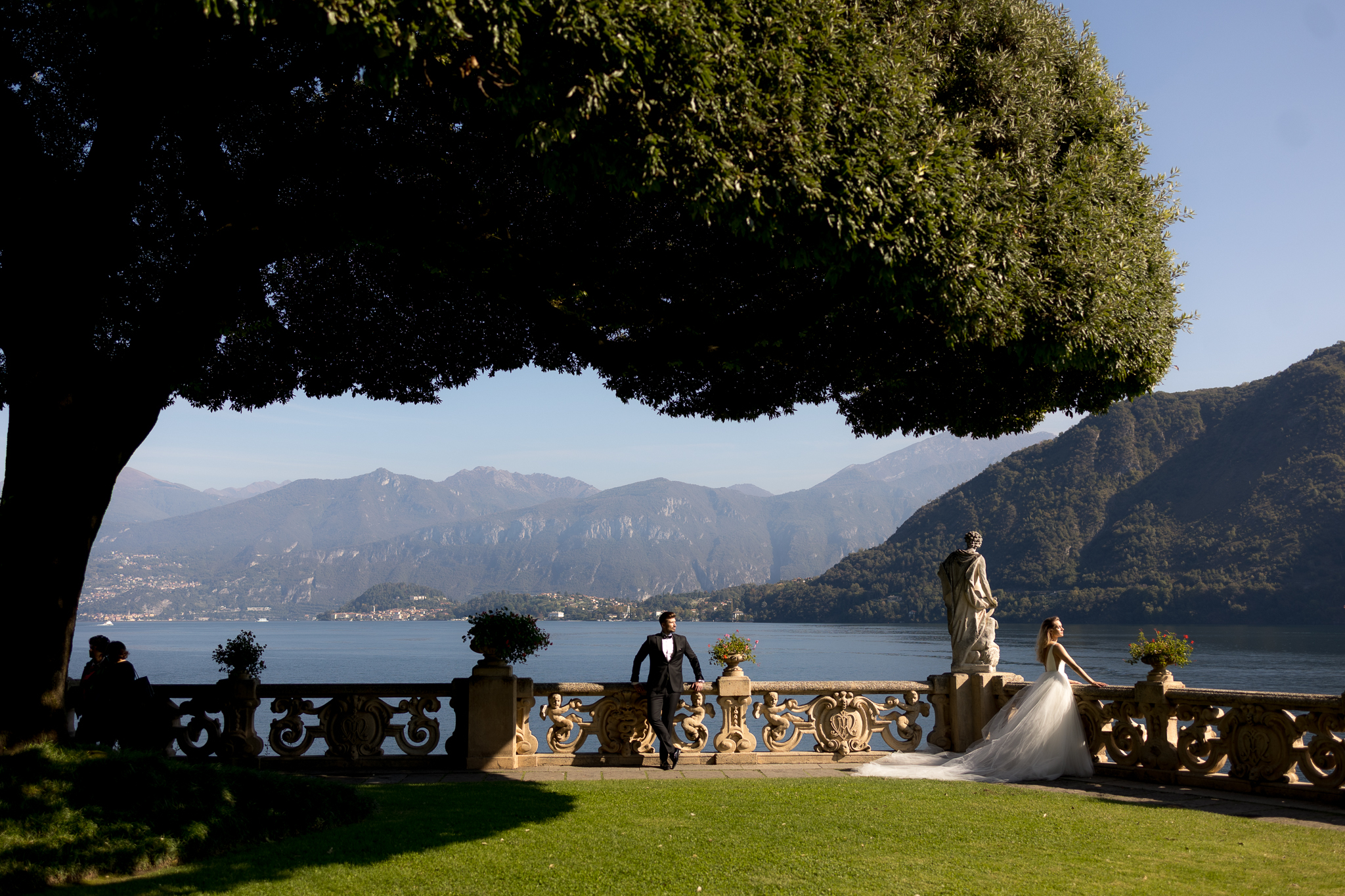
Extensive gardens, terraces on different levels, paths, historic architecture, monumental trees and views of the lake in many directions mean that we discover new photographic possibilities at practically every step.
We have photographed here both between 1 pm and 3 pm and during a later session from 3 pm to 5 pm.
In both cases the place worked brilliantly.
During our visits, until around 2 pm the sun beautifully lit the upper terrace. Later we could move to other parts of the garden and use different directions of light.
Of course, the exact course of the light depends on the season, but it is precisely this ability to change location that is a huge advantage of Balbianello for us.
We love the upper terrace, the distinctive architecture, the lower part of the garden with its huge tree, and the way down towards the lake, where the gates to the boat landing are.
Despite the villa’s popularity, its size usually lets us find space to photograph, even when other visitors are around.
If we had to choose just one villa on Lake Como for a wedding session, it would be Villa del Balbianello.
How to get to Villa del Balbianello?
We have reached the villa both on foot and by boat.
The walk from Lenno is roughly one to two kilometres, depending on where you start.
It is worth taking into account, especially when the couple is in elegant outfits and the photographers are carrying extra equipment.
The alternative is the boat crossing.
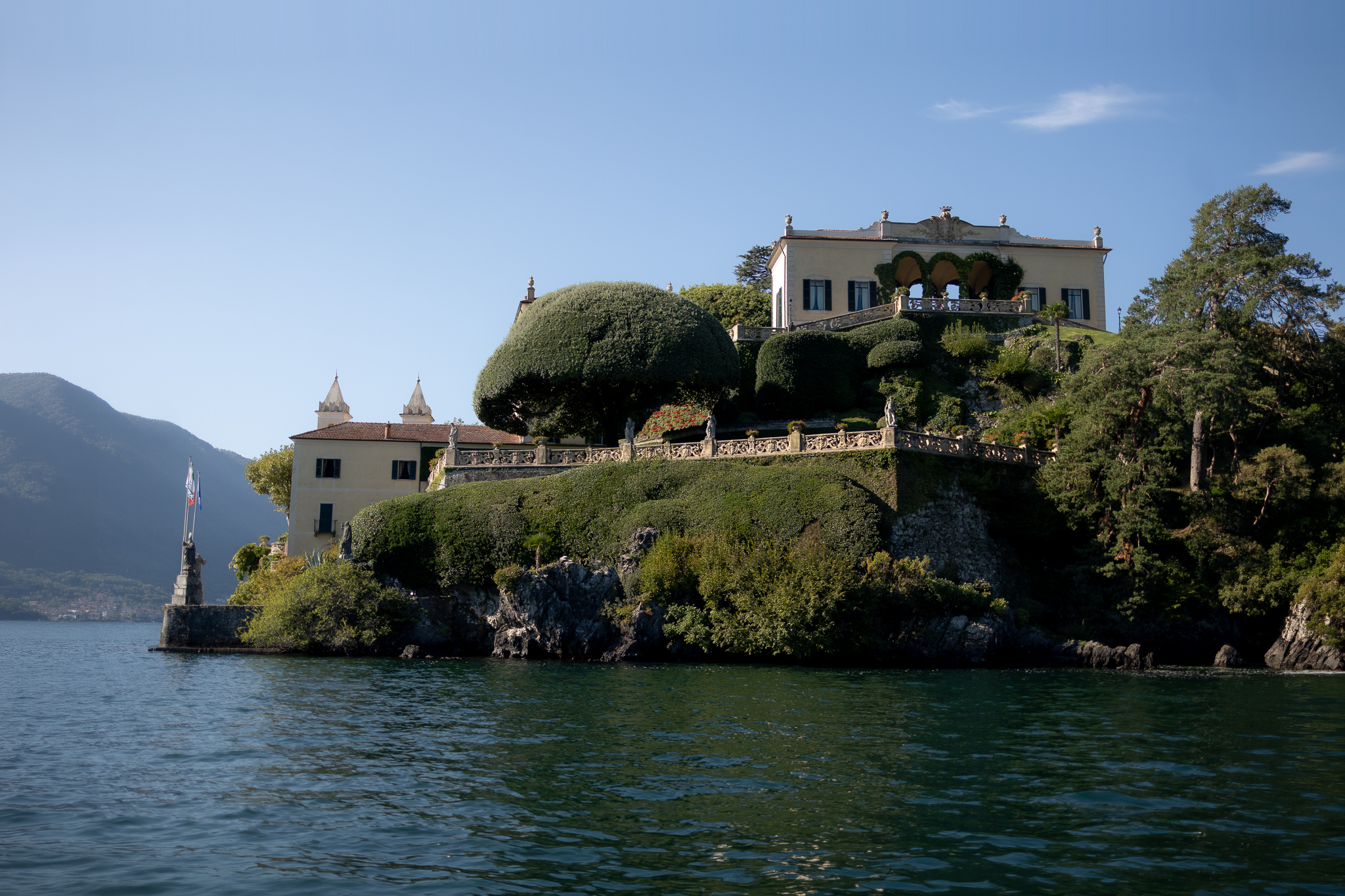
It is a lovely experience that lets you see the villa from the lake. We wouldn’t count on spectacular photographs during an ordinary shared crossing, though. The boat may be full of passengers, and the photographic possibilities are limited.
During one of our sessions, however, we found a way to get an interesting shot. We waited for the other passengers to get off, and our couple left the boat last. This let us photograph the moment of stepping ashore so that it looked almost like arriving by private boat.
A private boat – definitely worth it
If you are planning a wedding session on Lake Como, we strongly recommend setting aside part of the budget for a private boat trip as well.
Even an hour on a boat can give us enormous photographic possibilities.
It is from the lake that you best see the monumental villas, gardens descending to the water, the mountains and the small towns stretching along the shore.
We can create elegant portraits on deck as well as wide frames using the architecture and landscape. If you want shots of the whole boat with the couple, though, you need an additional vantage point, for example from the shore or a second boat.
A private trip also lets you agree the route and photo stops with the captain in advance.
In our experience, combining a beautiful villa with a boat session is one of the best ways to make the most of Lake Como’s photographic potential.
If you are working with a smaller budget, an ordinary ferry between the towns can also be a good idea. For a relatively small price, it lets you see the lake from a different perspective, although of course it doesn’t give you the freedom of a private trip.
Our tip: if your budget allows, choose Villa del Balbianello and a private boat. If you are looking for a more economical option, start with Bellagio and a ferry ride.
04 · Tuscany
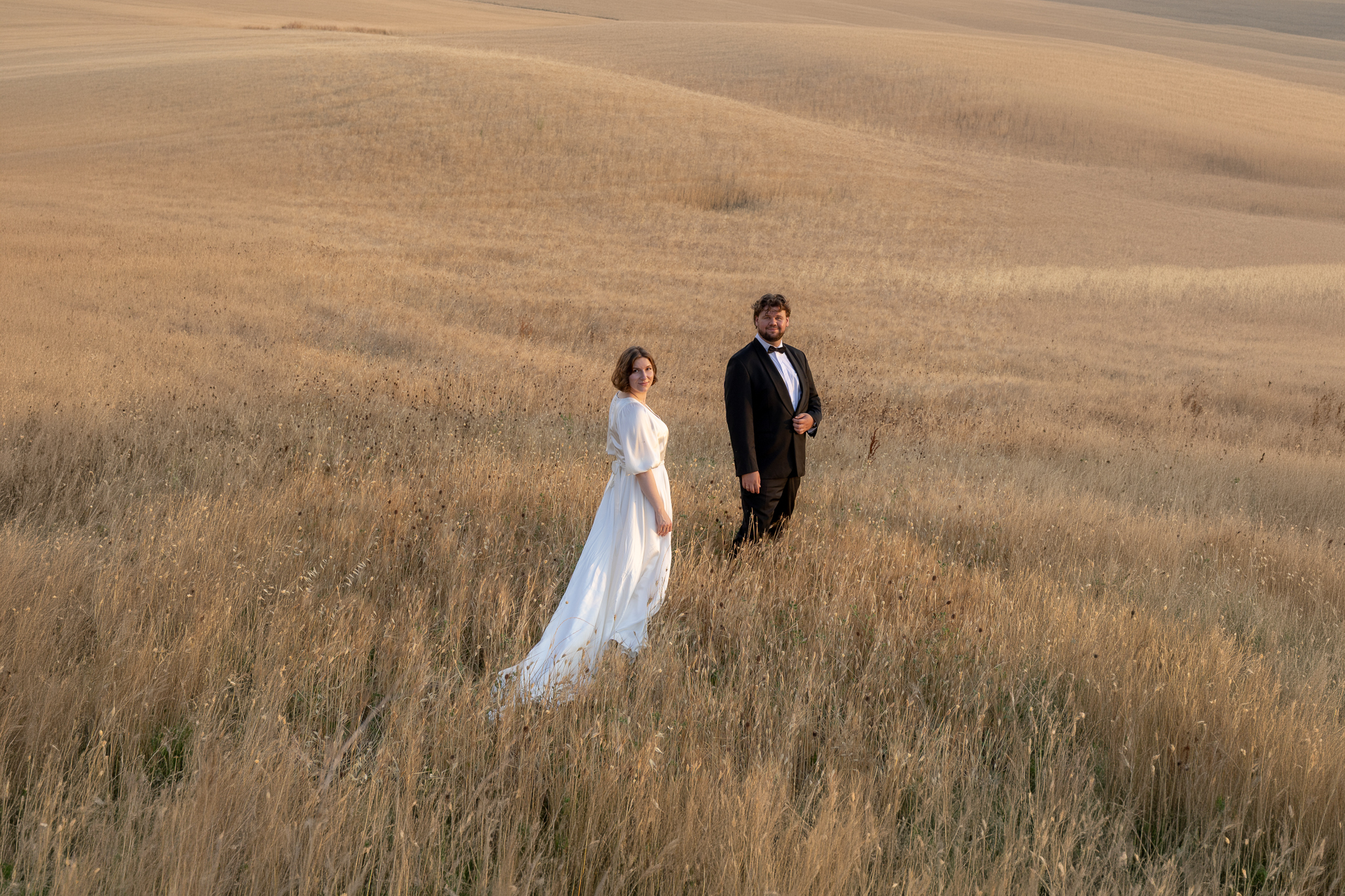
Tuscany – hills, cypresses and a wedding session in the Val d’Orcia
Tuscany is a place you could hardly mistake for any other region of Italy.
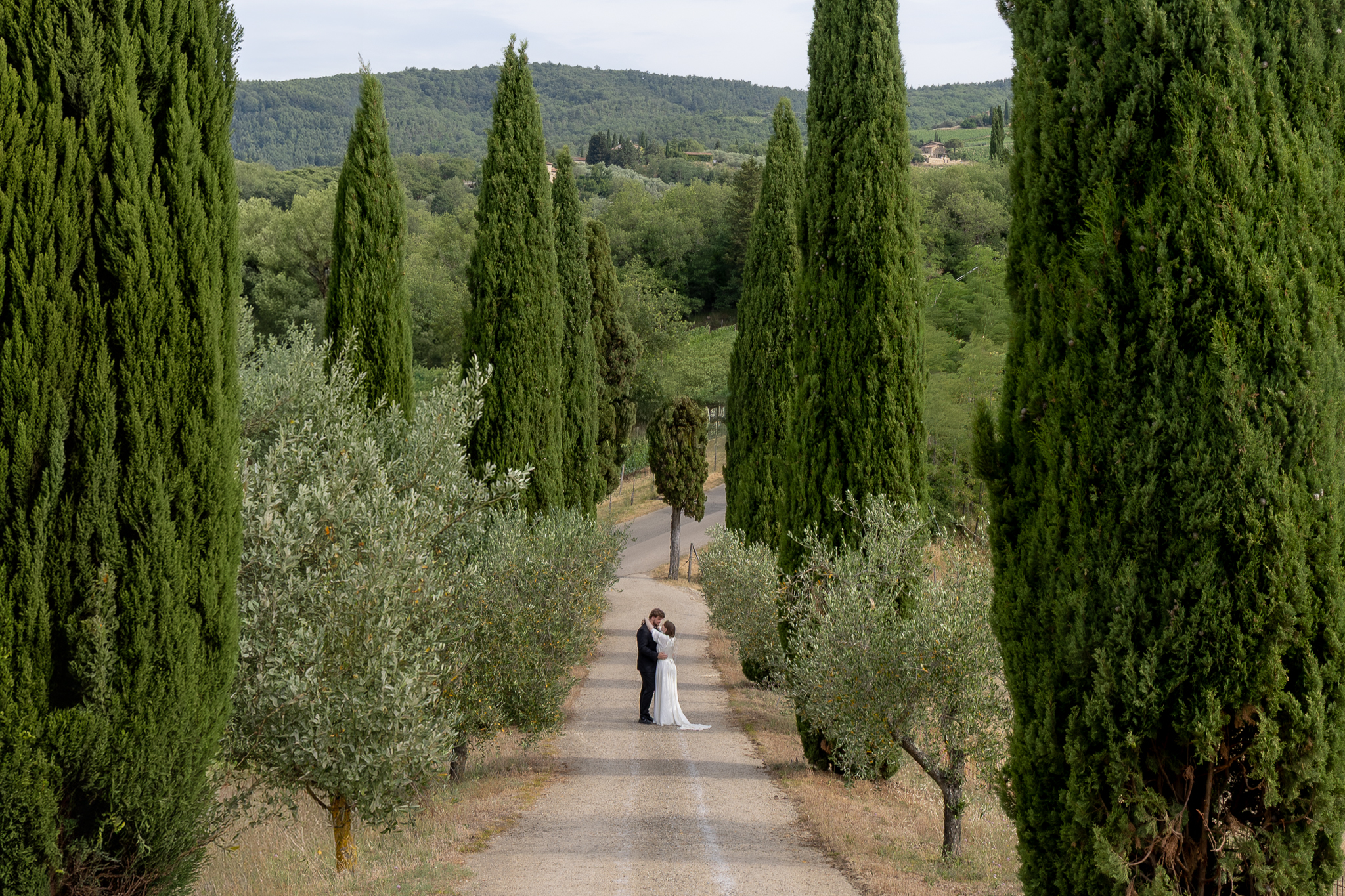
Rolling hills, lone cypresses, wide fields, vineyards and stone farmhouses create a distinctive landscape known from films and photographs.
In practice, however, finding a beautiful place for a wedding session isn’t always as simple as it might seem.
On our travels we have learned that many of the most iconic Tuscan roads, avenues and fields are on private land.
More and more often we come across locked gates, fences, no-entry signs and CCTV.
So if you are planning a wedding session in Tuscany, it is worth checking access to your chosen locations in advance.
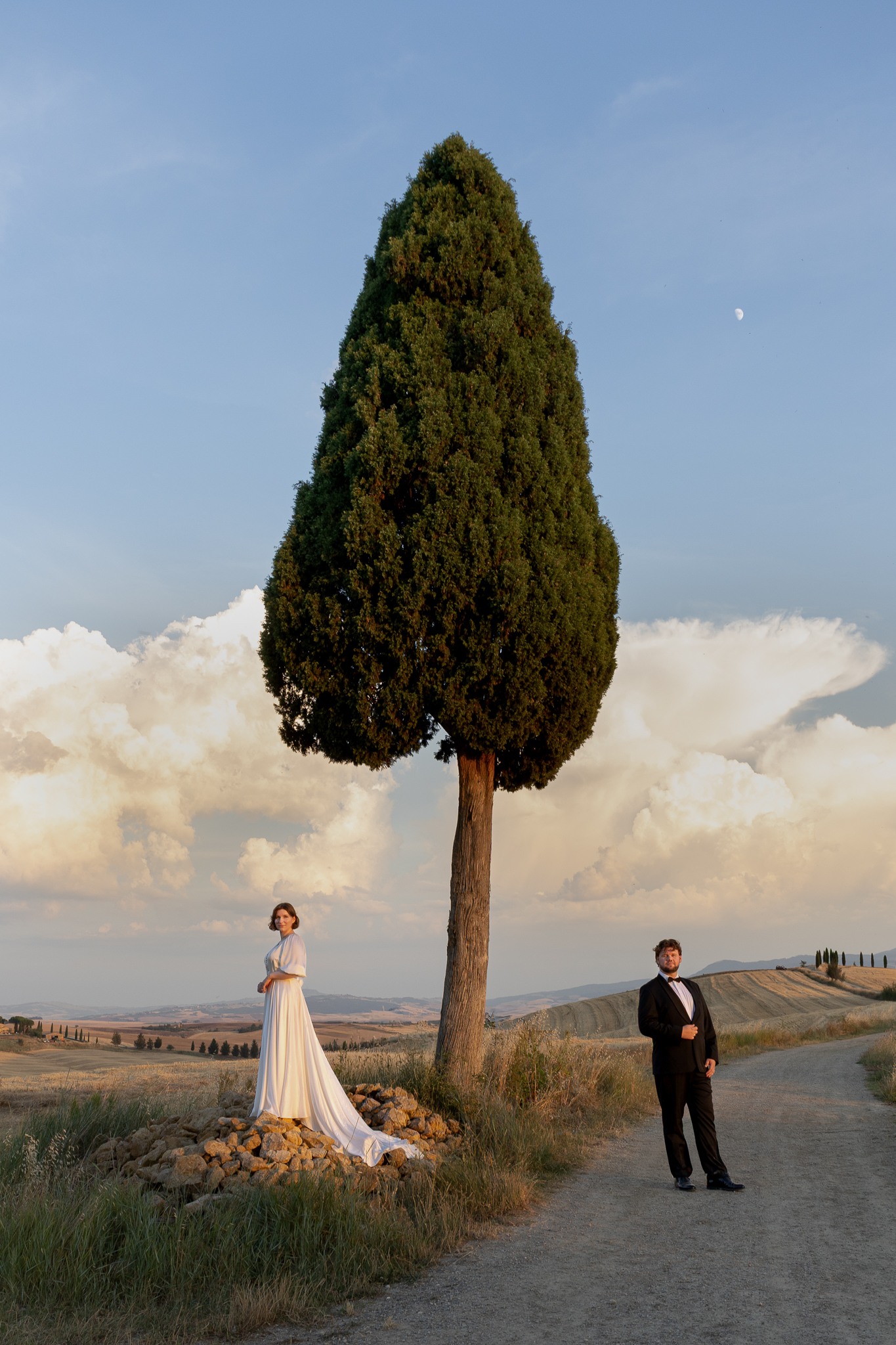
Not every cypress road is accessible
One popular place we had visited on earlier trips used to be full of photographers and wedding couples.
We met couples there from Poland, Mexico and Asian countries. The place was very popular, and calm photography was often difficult.
On our next visit in 2026, we found the land fenced off and monitored, with no way to walk in freely.
It is a good warning for anyone planning a session based solely on photos found online.
A beautiful location doesn’t always mean you can simply turn up and start photographing.
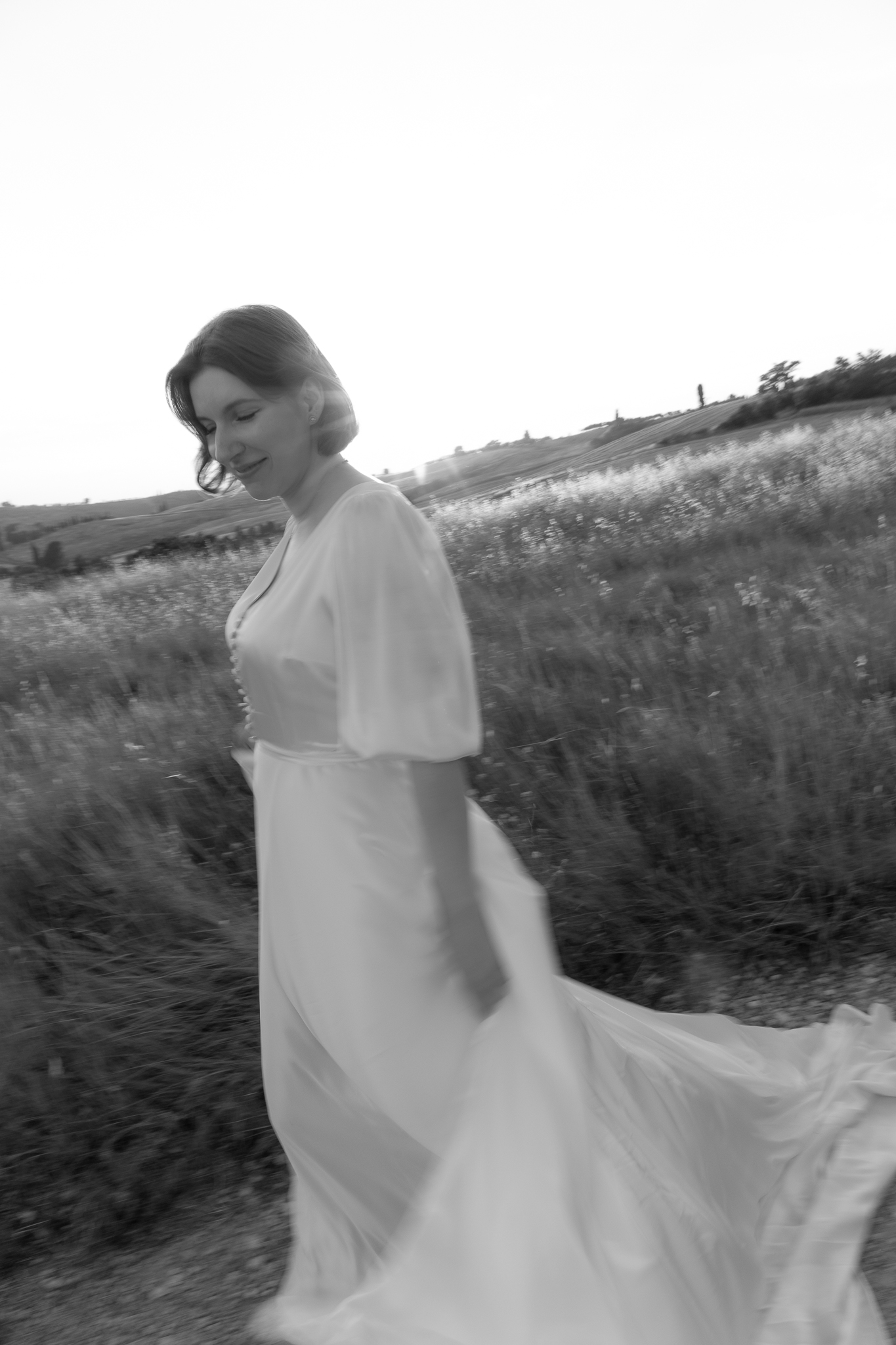
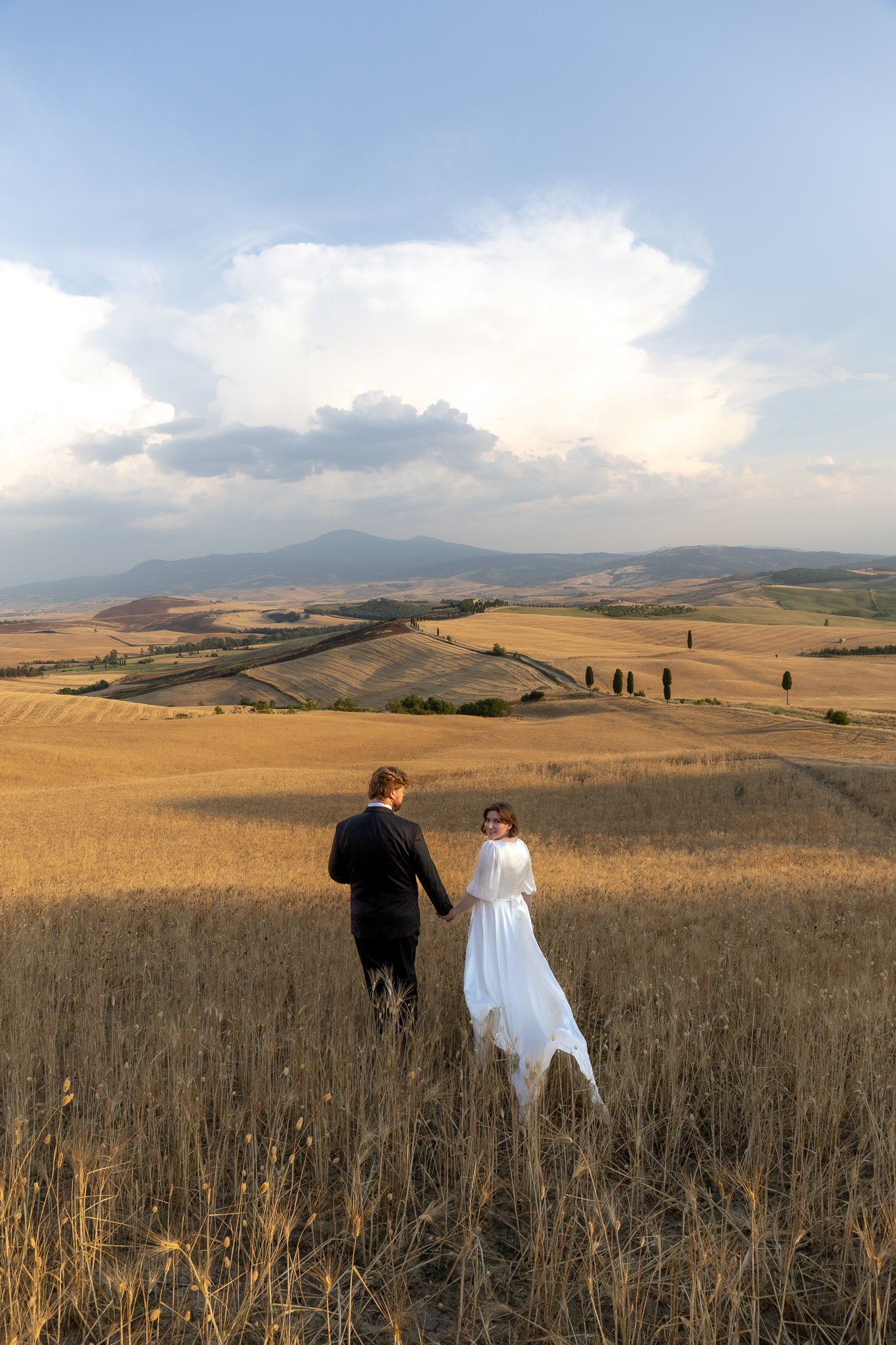
The Gladiator Road – one of our favourite places in the Val d’Orcia
One of the locations we especially recommend is the famous Gladiator Road near Pienza.
Wide fields, rolling hills and lone cypresses create an incredible landscape here. It is views like these that make Tuscany so distinctive.
What impresses most, however, is the light.
We strongly recommend planning your session here for sunset. When the sun is low on the horizon, the hills take on warm colours and the light beautifully emphasises their shapes.
You can also create interesting photographs here during the day, but in our experience sunset gives by far the most spectacular effect.
There is, however, one detail worth knowing.
The walk down to the photo spot is relatively easy. The problem starts on the way back.
A long and truly tiring climb awaits. Combined with the summer heat, it means quite an effort, especially in a wedding dress and suit.
A sweaty back, fatigue and a ruined hairstyle are not the best start to the next part of the session.
That is why we recommend leaving the Gladiator Road for the very end of the day.
First we take all the other photographs, and then we walk down into the hills to make use of the beautiful light of the setting sun. Of course, you also need to plan the way back, taking into account darkness, temperature and your own fitness.
Cappella della Madonna di Vitaleta – beautiful but private
One of the most iconic places in the Val d’Orcia is the small chapel of Madonna di Vitaleta, surrounded by cypresses and rolling hills.
We visited it on one of our trips and learned that turning up with a camera isn’t enough to hold a session.
When we wanted to photograph, the owner came over and told us that the land is private and that a professional session requires advance booking and a fee.
Interestingly, she had spotted us on CCTV from around 300 metres away.
We were allowed to look around, but we didn’t get permission to photograph the couple.
It shows perfectly why it is worth contacting the owners of popular Tuscan locations in advance. Sightseeing and organising a professional session can be subject to completely different rules.
Staying at a Tuscan estate – the best base for photographs
If you are planning a wedding session in Tuscany, we recommend choosing your accommodation carefully.
In our experience, a great solution is renting a room or apartment on a small estate in the hills.
Around places like these you often find everything you are looking for: cypress-lined roads, fields, vineyards, stone buildings, old chapels and small squares.
Importantly, when staying with local owners it is often easier to arrange permission to photograph on the property.
That doesn’t automatically give you the right to go everywhere, but in our experience hosts tend to be more open to sessions for their guests. It is simply worth asking for permission and about any extra fees in advance.
This way we can avoid hours of searching for yet another cypress road that turns out to be closed.
Sometimes the most beautiful place for photographs is just a few hundred metres from your apartment.
Castello di Volpaia – Tuscany in one place
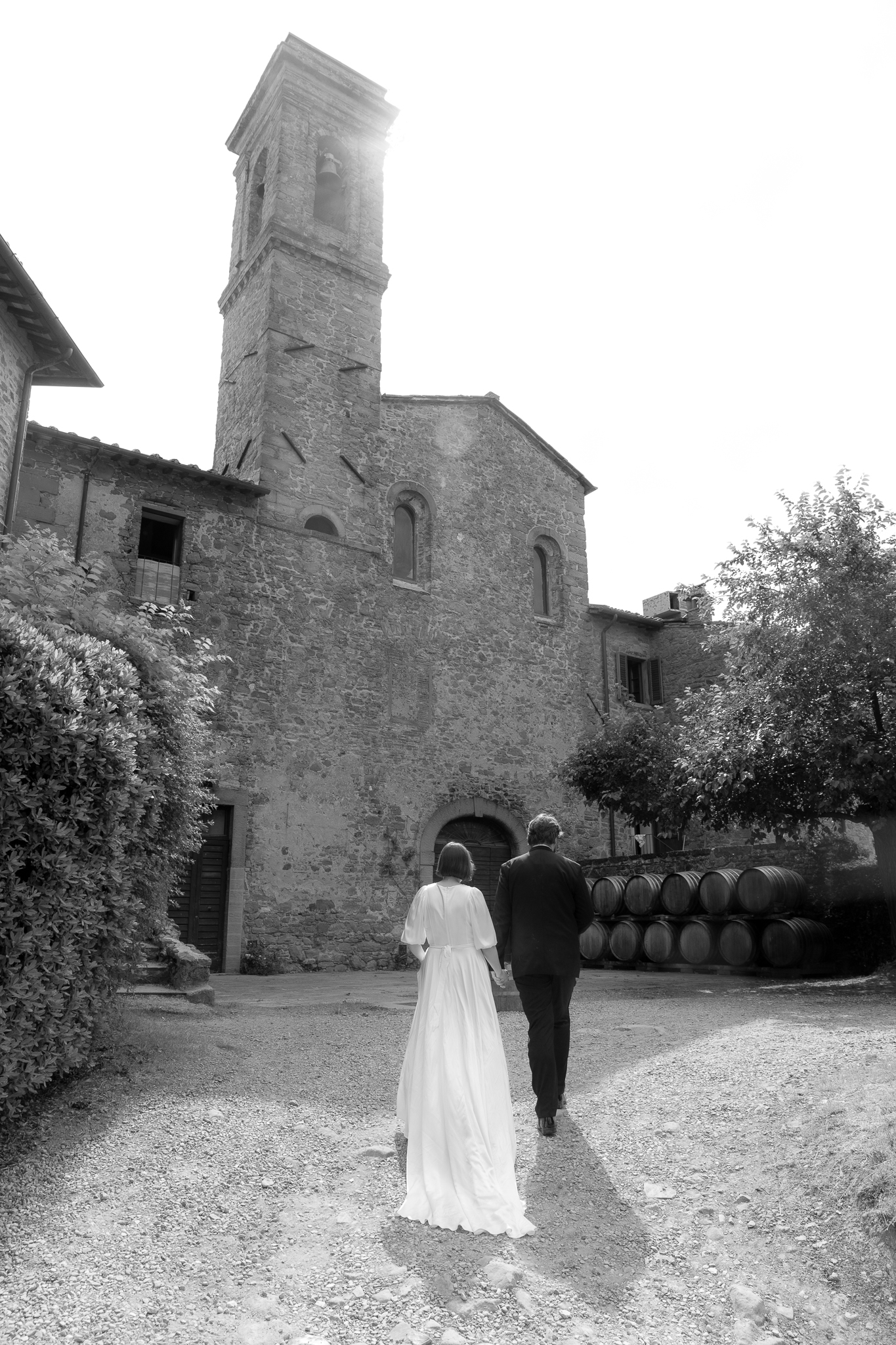
One place that has stayed with us is Castello di Volpaia, a medieval hamlet in the Chianti region, near Radda in Chianti.
Its landscape is completely different from the rolling hills of the Val d’Orcia, but photographically it offers enormous possibilities.
In a relatively small space you will find almost everything associated with Tuscany: old stone buildings, small squares, restaurants, vineyards, gardens, cypresses and winemaking spaces, including huge barrels.
Here we can create elegant portraits among historic architecture as well as more relaxed photographs among the vineyards.
During our visits we also didn’t encounter the crowds typical of the region’s best-known locations.
Castello di Volpaia also offers accommodation, so it is worth considering staying the night. That way you don’t have to keep driving around, and the session can be planned at a calmer pace.
Access to private gardens, vineyards and interiors must of course be arranged with the owners in advance.
Our tip: in Tuscany it is worth combining one proven location, such as the Gladiator Road, with a stay at a beautiful estate. This gives you varied photographs and helps you avoid some of the problems with access to private land.
05 · Amalfi Coast
Positano – colourful streets, the sea and illuminated hillsides
The Amalfi Coast is one of those regions of Italy worth visiting even without planning a wedding session.
Winding roads along steep slopes, monumental rocks, bridges with sea views and small towns clinging to the cliffs create a landscape you won’t forget for a long time.
We strongly recommend setting aside at least one separate day to explore the coast. The drive itself is an extraordinary experience. Around every bend new views appear – small coves and panoramas that make it hard not to stop for a moment.
If you have more time, it is also worth planning a separate trip to Vesuvius to see the panorama of the Bay of Naples.
For the wedding session itself, however, we especially recommend Positano.
Positano – start photographing on your way down to the sea
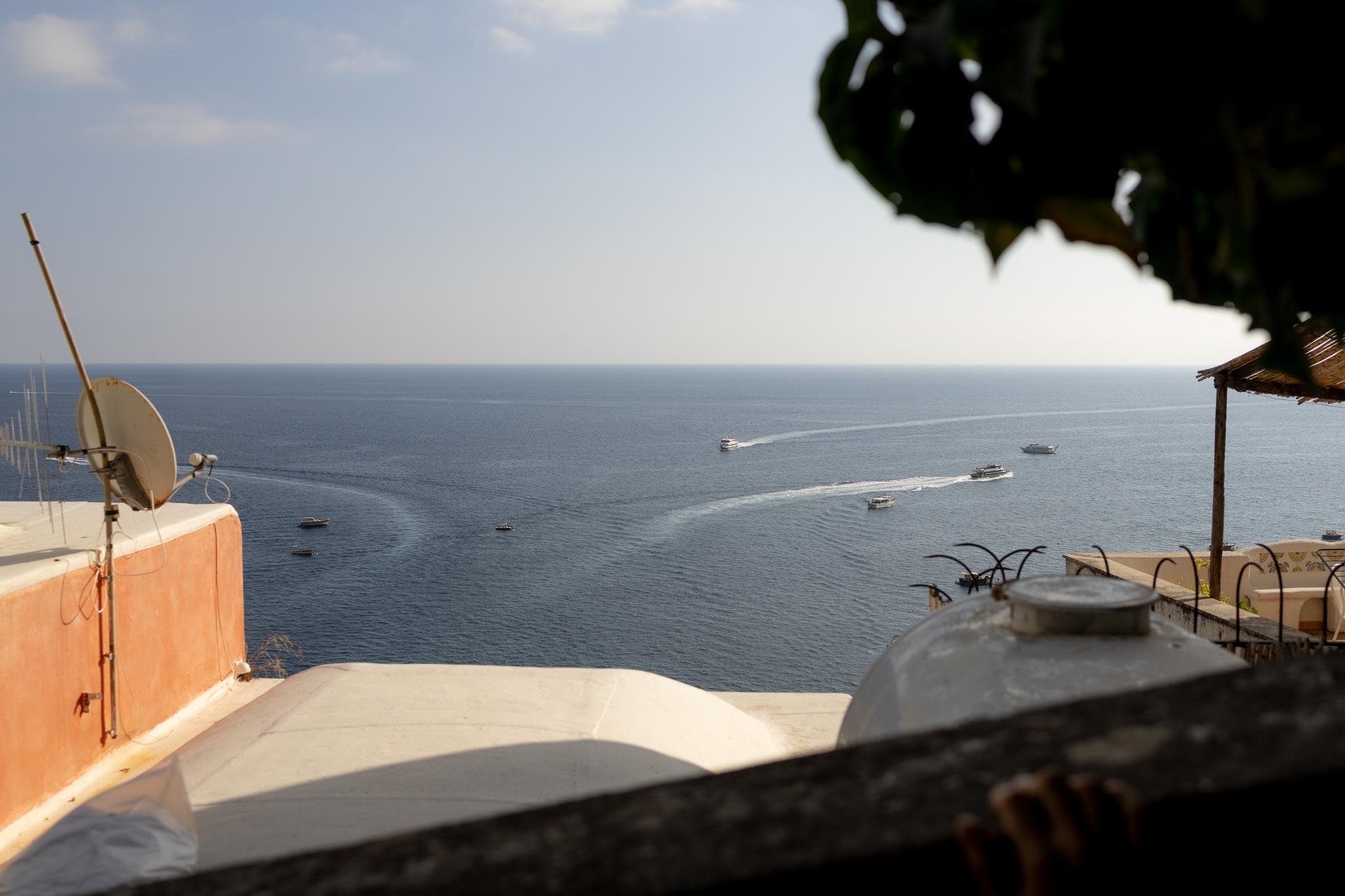
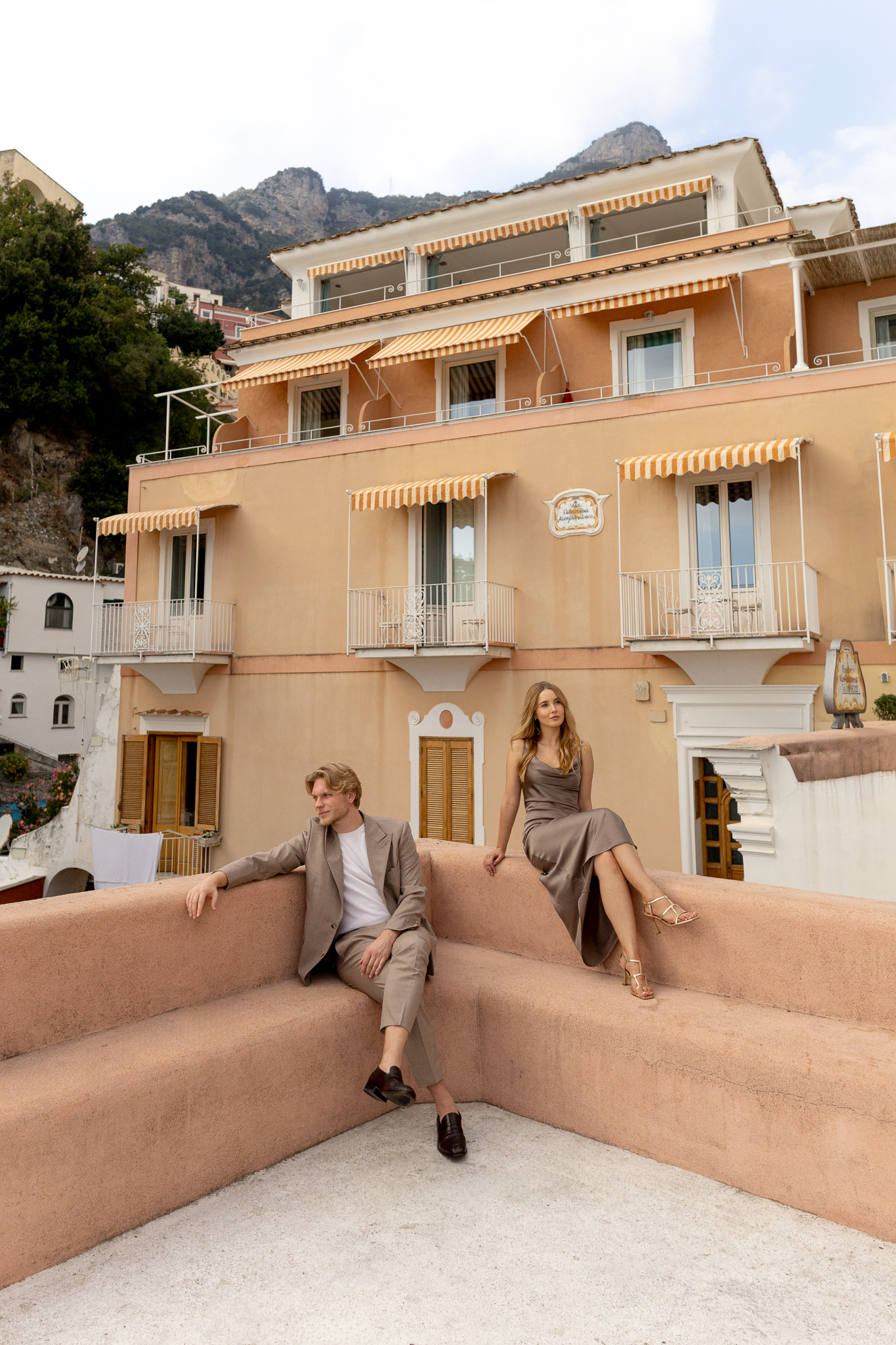
Positano is built on a steep slope, with its colourful buildings cascading down towards the sea.
Narrow streets, stairways linking the town’s levels, small restaurants, shop windows, lemons and the smell of Italian food create an atmosphere that is part of the place itself.
In our experience, the best way to do a session is to start photographing in the upper part of the town and gradually walk down towards the beach.
It is worth looking for parking higher up and not wasting too much time hunting for the cheapest space. Parking in Positano can be expensive, but during a session making good use of time and light matters more to us.
You will find plenty of photographic opportunities on the walk itself.
Stairways, colourful façades, small squares and passages between buildings offer interesting compositions, often with the sea appearing in the background.
There’s no need to wait until you reach the beach to start photographing.
Around the church of Santa Maria Assunta
One place especially worth stopping at is the area around the church of Santa Maria Assunta, known for its dome covered in colourful tiles.
Here you will find stairs, terraces and architectural details that work beautifully for elegant wedding portraits.
It is worth using both the views over the town and the geometric lines of the stairs or the distinctive colours of the buildings.
Spiaggia Grande – Positano’s most recognisable panorama
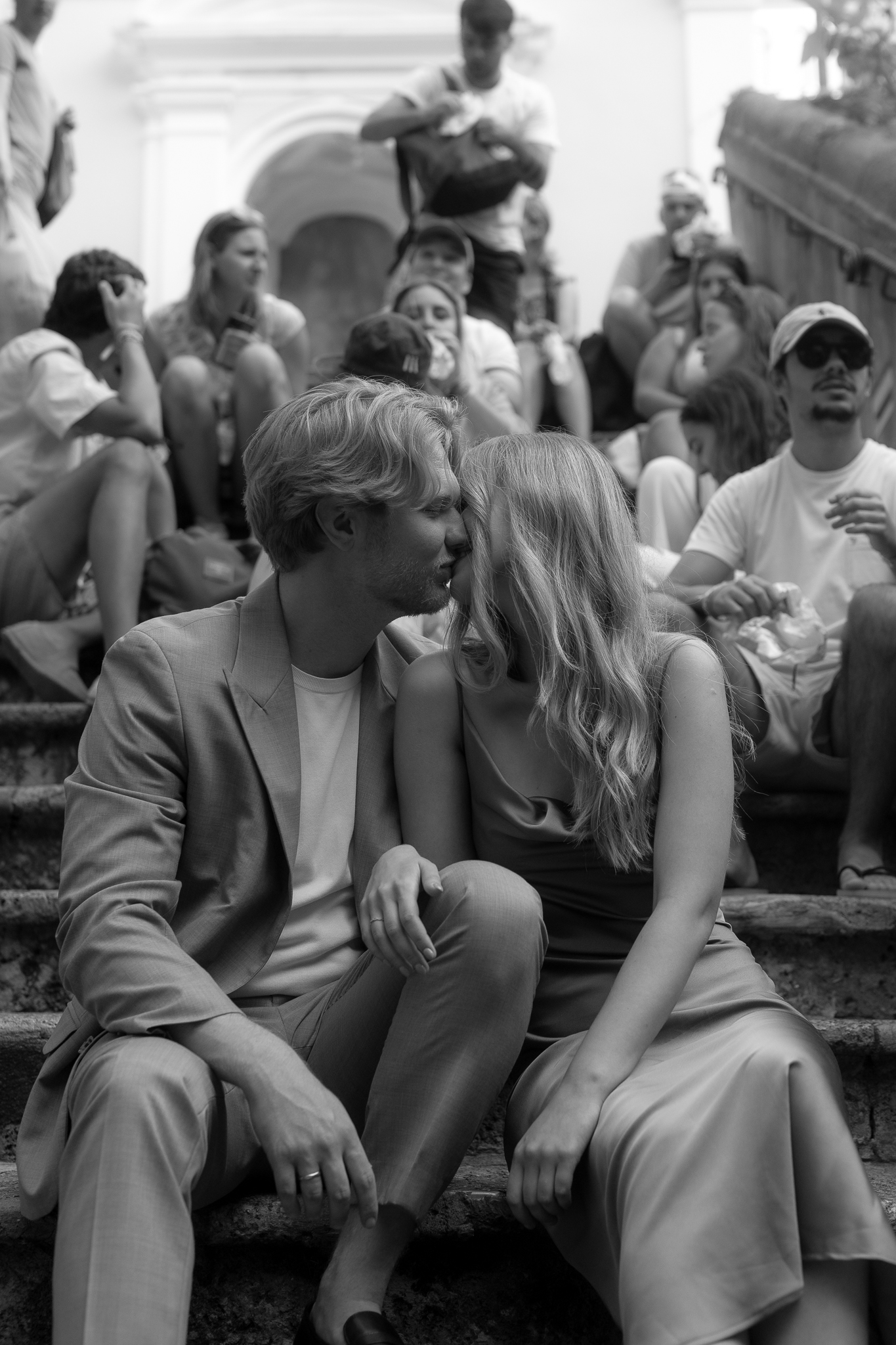
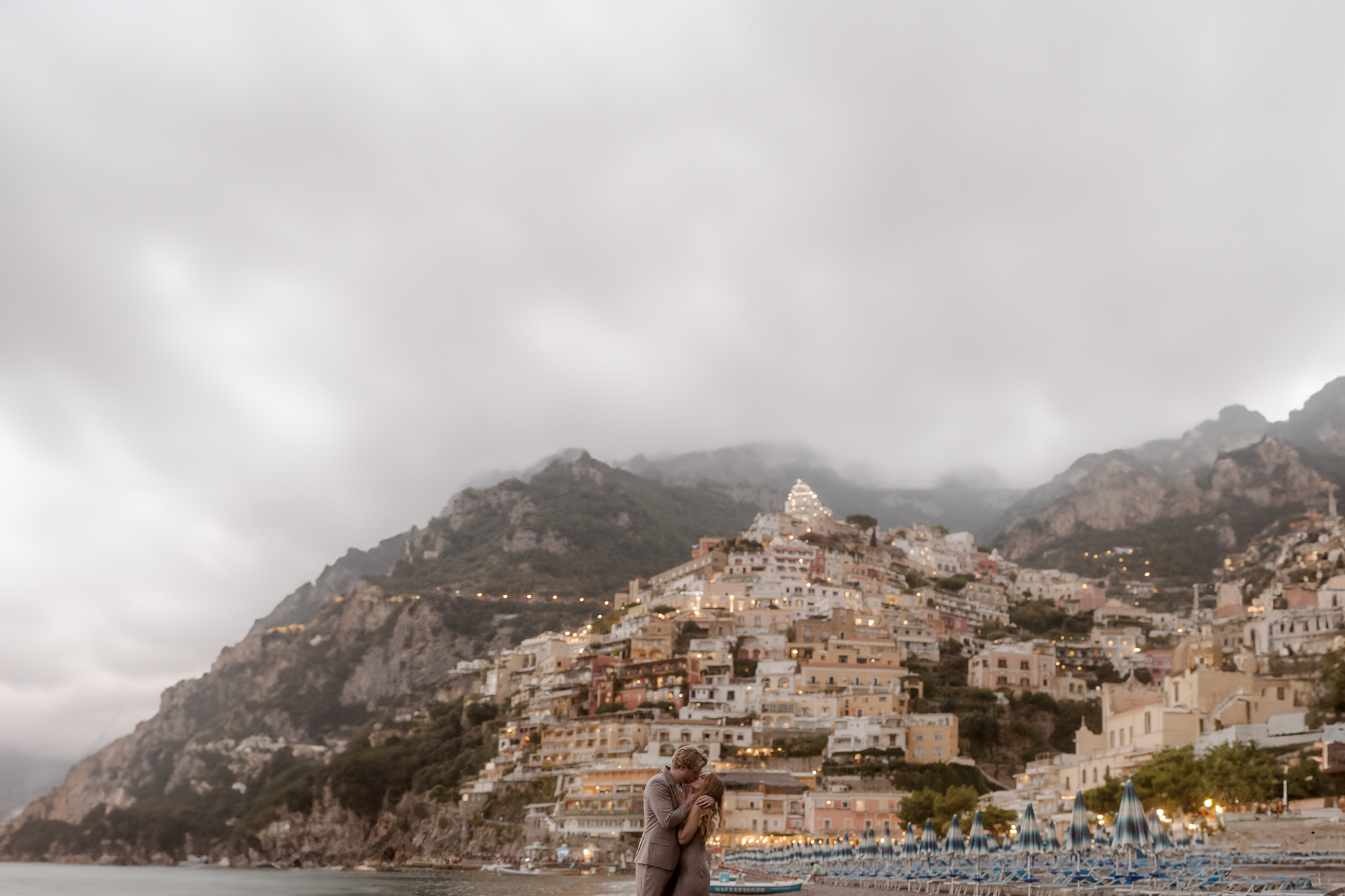
Walking down through the town, you finally reach Spiaggia Grande, Positano’s main beach.
This is where you can create the most iconic photographs of the place.
It is worth walking towards the water to photograph the couple against the whole town. The colourful buildings spreading up the slope, the church and the steep cliffs create an incredibly striking composition.
We can take wide frames showing the whole panorama as well as closer portraits using the buildings as a backdrop.
Rocks and small grottoes by the beach
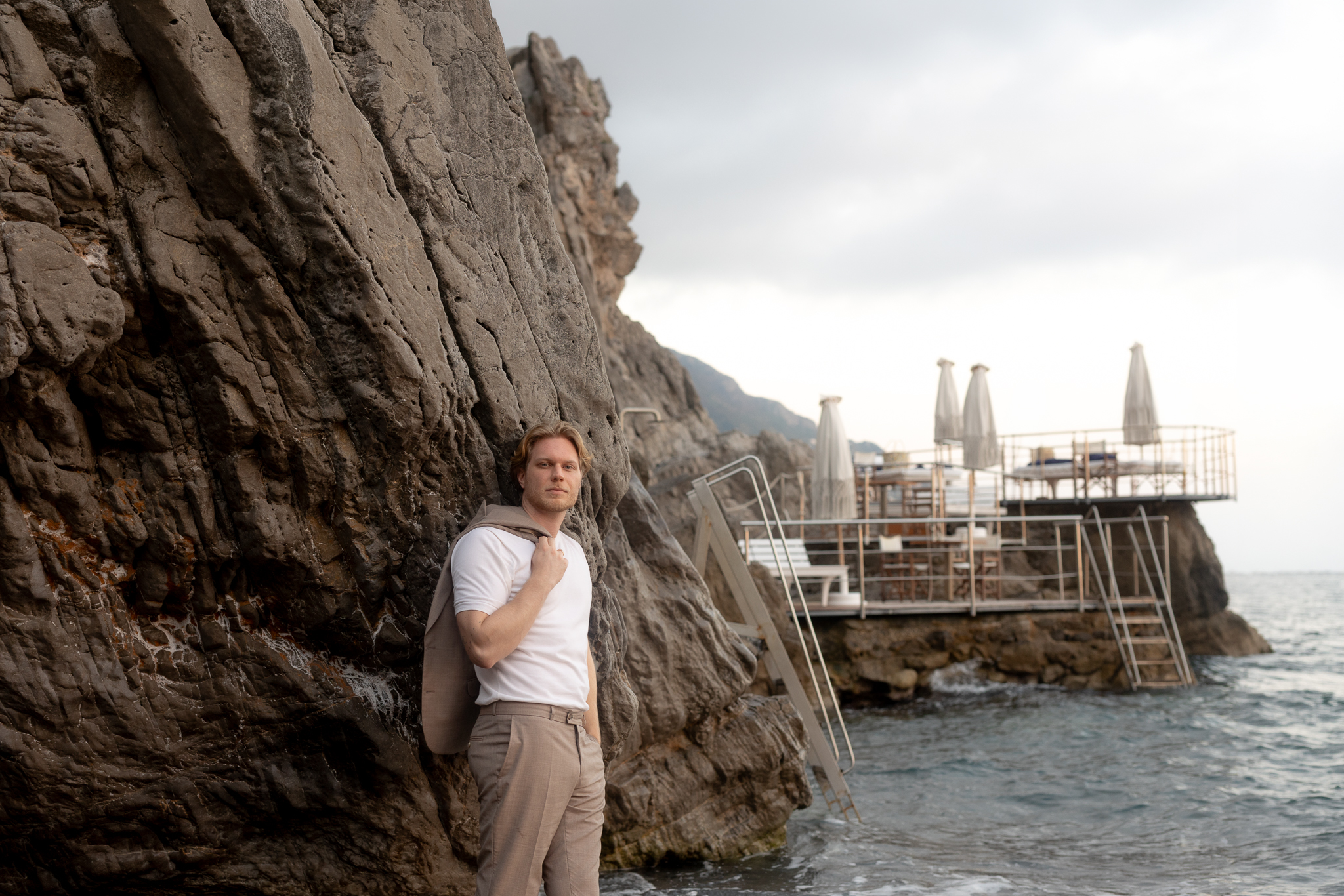
One place we especially recommend is the rocky stretch of coast at the end of the beach.
At first glance it is easy to miss.
There you will find large boulders, sections of rock wall and small hollows resembling grottoes.
It is a completely different setting from Positano’s colourful streets. Raw rocks, a darker background and natural textures allow for more minimalist, slightly fashion-led portraits.
Do take care on the uneven ground, though, and avoid dangerous spots when the waves are high.
A walk along the rocky coast
At the opposite end of the main beach, it is also worth taking the path along the rocky shore towards Fornillo.
From this perspective we can photograph the town a little differently than from the beach itself.
The coastline, the rocks, the sea and Positano’s buildings in the distance create another interesting backdrop.
It is a good example of how many possibilities one location offers if you take a little time for a calm walk and look around.
The best time for a session in Positano – afternoon and evening
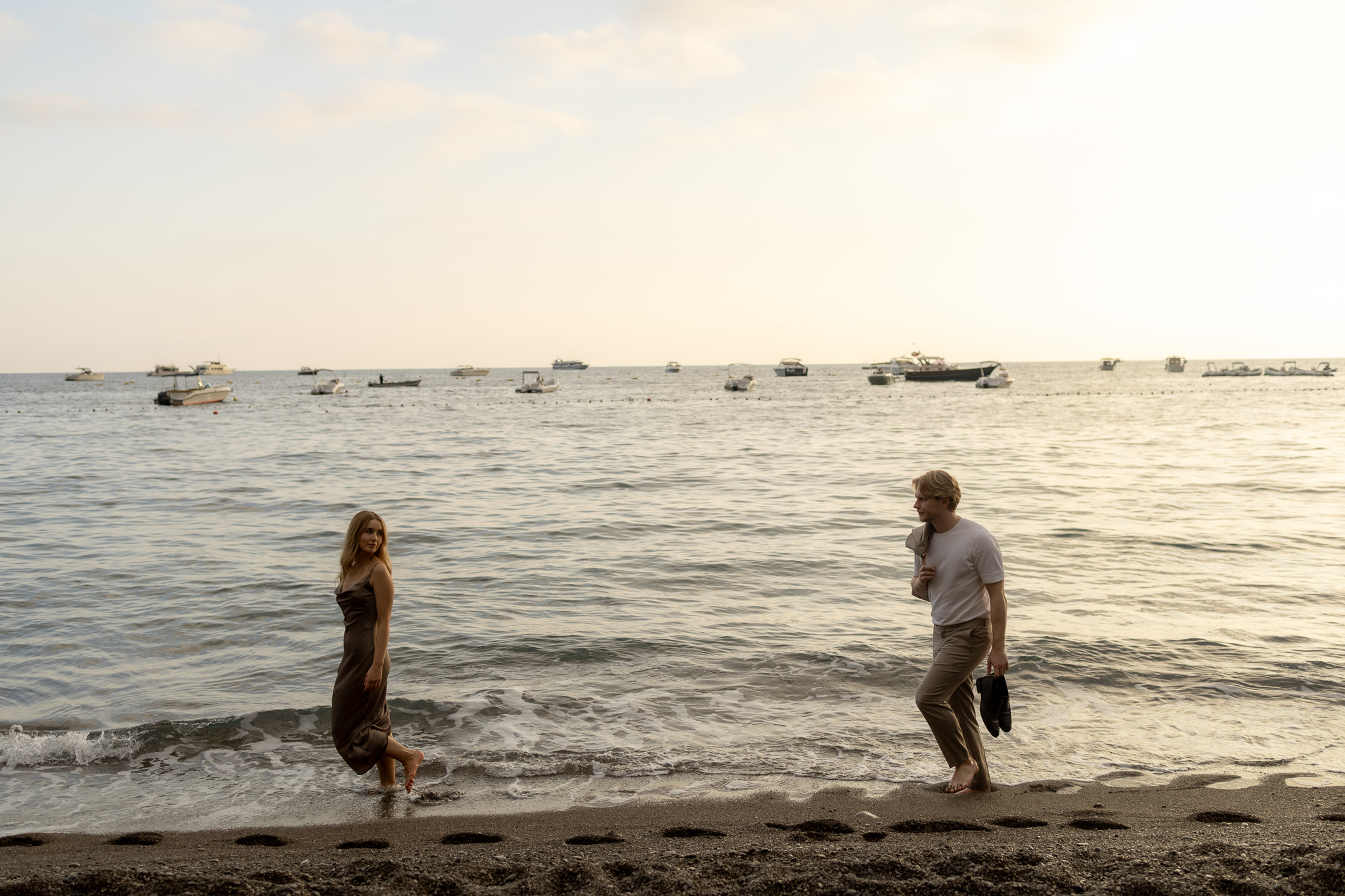
During our sessions we photographed in Positano in the afternoon and evening.
We love the afternoon light that falls on the colourful buildings spreading up the slope. It lets us show the town’s distinctive architecture in all its glory.
But we wouldn’t stop photographing at sunset.
As evening falls, Positano changes beyond recognition. Lights gradually come on in windows, restaurants and on terraces, and the whole hillside begins to glow with hundreds of tiny points of light.
It is the perfect moment for the final part of the session.
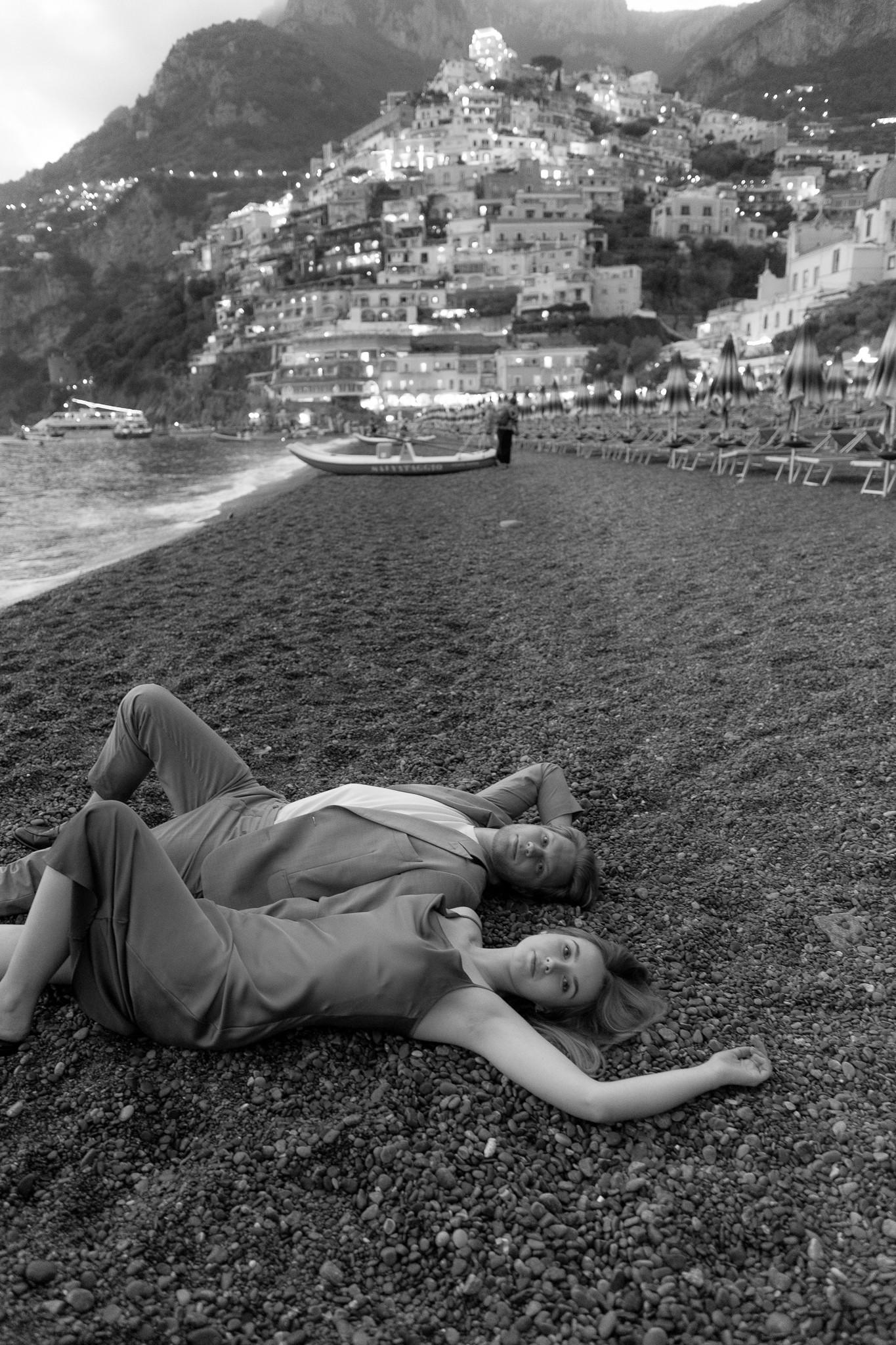
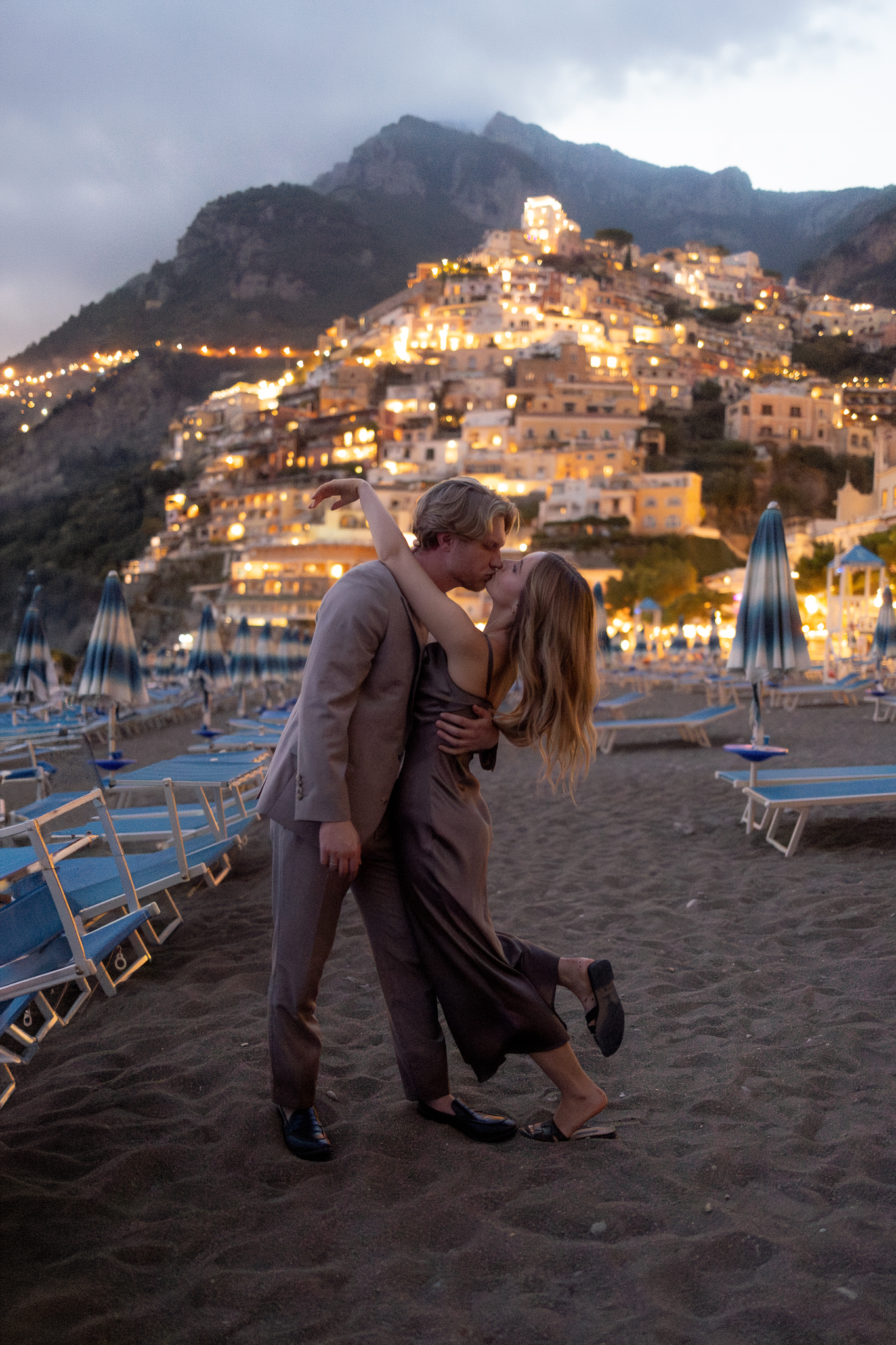
A panorama of Positano from the road outside town
After photographing in the centre, we recommend driving a little way out of Positano and finding a safe viewpoint along the coastal road.
From further away we can show the whole town: colourful houses spread across the steep slope, the sea and the iconic road winding between the cliffs.
It looks especially beautiful in the evening, when the buildings start to light up and the sky still keeps a touch of blue.
It is a great moment for wide, almost cinematic frames in which the couple becomes part of the whole landscape.
Keep in mind, though, that the roads on the Amalfi Coast are very narrow and winding. Only stop in permitted, safe places.
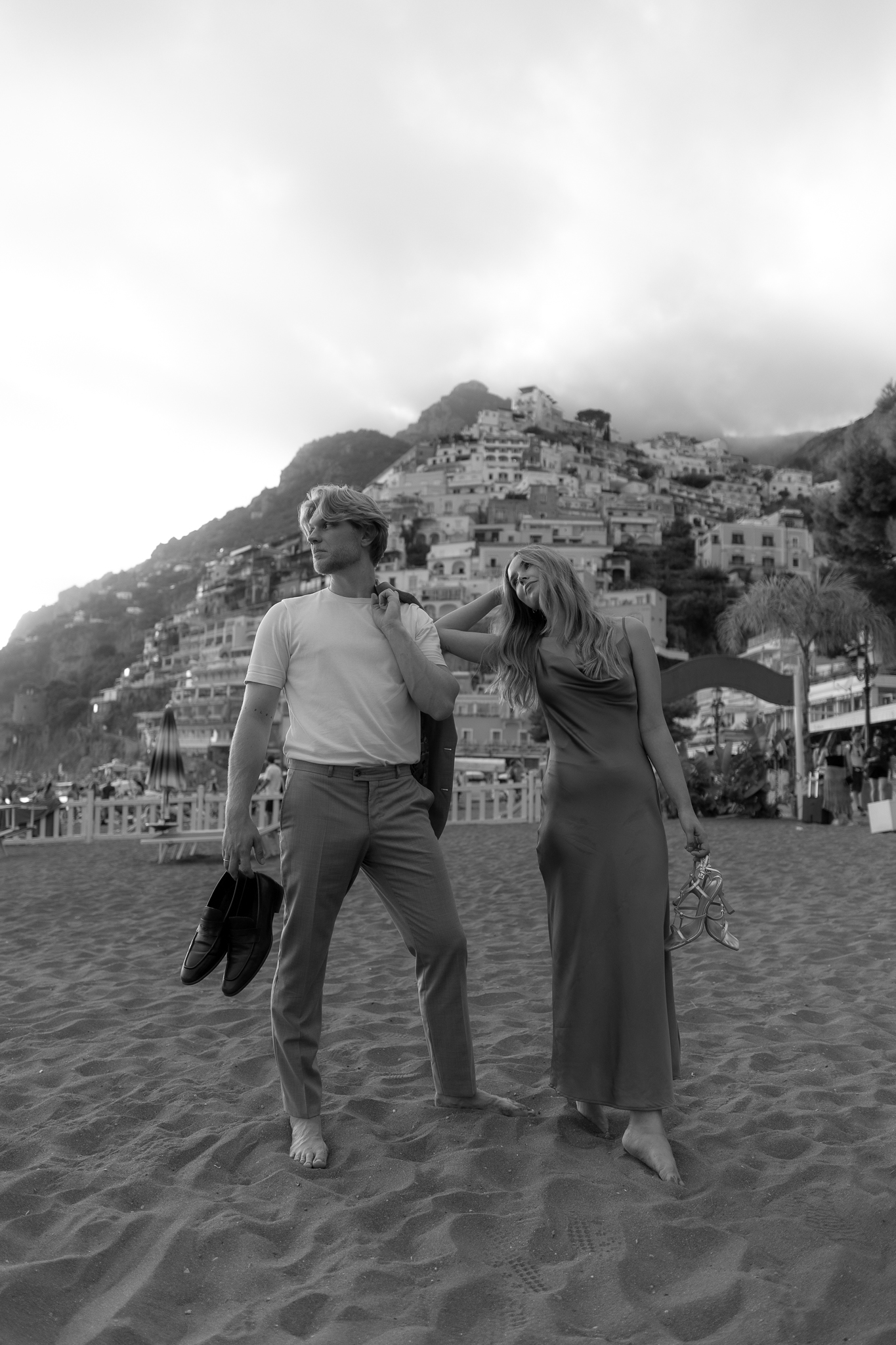
Our tip: plan your Positano session from afternoon into evening. Start high up in the town, gradually make your way down to the beach, and take the final photographs with the panorama of illuminated Positano behind you.
Guide
How to plan a wedding session in Italy?
Each of the places described has a completely different character and requires a different approach.
The Dolomites captivate with their monumental landscape, but require proper preparation and time for travel. Venice is at its best at dawn, when you can still enjoy the most popular spots without crowds. On Lake Como it is worth investing in access to a beautiful villa and a private boat. In Tuscany, checking access to private land is key, and Positano is best photographed on a calm walk from afternoon into evening.
We don’t recommend planning a session based solely on beautiful photos found online.
It is worth finding out in advance how to get to your chosen location, what time the light will be best there and whether professional photography requires prior permission or a fee.
It is also good to leave yourself some flexibility.
Sometimes the best photograph is taken in a place you hadn’t considered at all. At other times a beautiful location turns out to be inaccessible, or the weather forces a change of plans.
In our experience, it is much better to choose a few really good places and make the most of them calmly than to try to see every attraction in a region in one day.
Wedding session in Italy – key information
| Location | Best time, from our experience | What to keep in mind |
|---|---|---|
| Lago di Braies | Early morning | Light on the mountains, tourists, boat rental hours |
| Tre Cime di Lavaredo | Sunset | The walk, weather, darkness and a safe return |
| Venice | Dawn; also evening | Crowds, the Rialto, St Mark’s Square, water transport |
| Lake Como | Depends on the villa and the direction of light | Bookings, fees, garden access, private boat |
| Tuscany | Especially sunset in the Val d’Orcia | Private land, access paths, heat, session permits |
| Positano | Afternoon and evening | Stairs, parking, tourist traffic, panorama after dark |
Wedding photography in Italy – our perspective
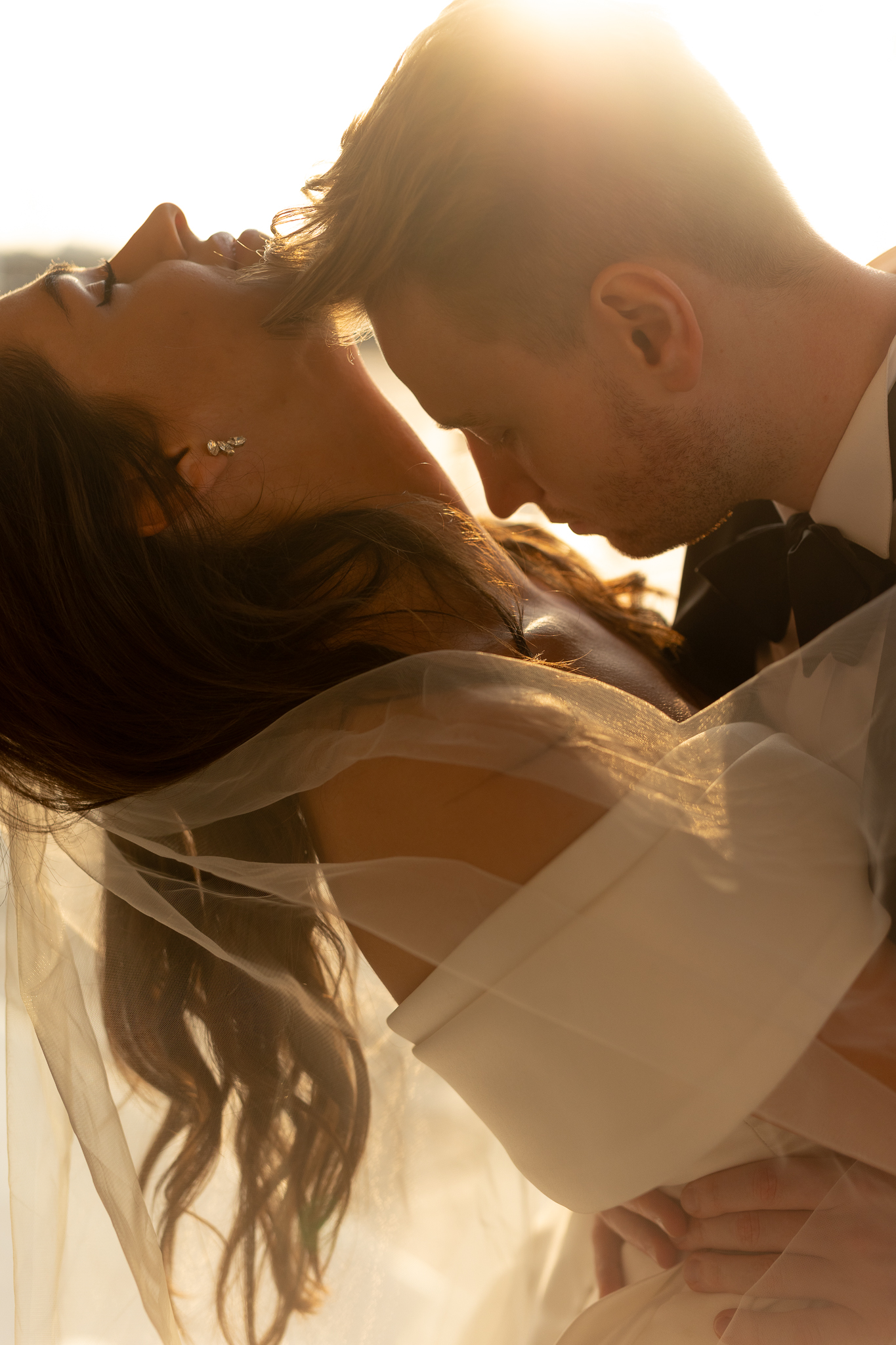
In fashion-inspired wedding photography, light, composition, architecture and the surrounding space matter enormously to us.
In this respect, Italy offers extraordinary variety.
We can create minimalist portraits against monumental mountains, elegant photographs in historic villas, urban frames inspired by fashion editorial photography, or natural, romantic photographs among the Tuscan hills.
Yet even the most beautiful location can’t replace good light, proper preparation and a couple who feel at ease.
That is why during our sessions we try to strike a balance between planning and spontaneity. We want to make use of a place’s unique character while leaving room for natural emotions and moments that can’t be staged in advance.
Whether we are photographing on Lake Como, in Venice, the Dolomites, Tuscany or Positano, we care about the same thing: timeless wedding photographs that will still have their character years from now.
Seasons 2027 / 2028
Tell us about your day
We photograph weddings across Poland and Europe. We will send you our full offer together with information on date availability.
 English